
The Hug Journal · Lace & Lift ·
How to measure your bra size at home (DD and up)
Measure your bra size at home with a soft tape in two numbers: band under the bust, then the fullest part. Cup chart to DDD and the fit checks that matter.
To measure your bra size at home, wrap a soft tape snugly around your ribs right under your bust for the band, then loosely around the fullest part of your bust. Subtract the band number from the bust number, and each inch of difference is about one cup size: 4 inches is a D, 5 is a DD, 6 is a DDD. Then try the bra on and check five fit points, because the tape is only a starting place.
What do I need before I measure?
- A soft sewing tape measure. A metal tape from the toolbox will not wrap around you evenly.
- A non-padded or lightly lined bra that fits you reasonably well, or no bra. Journelle notes that heavy padding can throw off the cup calculation.
- A mirror, so you can see that the tape stays level across your back.
- Two minutes and a relaxed breath. Measure on an exhale, not while holding air in.
How do I measure my band size?
Stand straight with your arms down. Wrap the tape around your ribcage directly under your bust, where the bottom of a bra band would sit. Pull it snug but not painful, and check in the mirror that it is level all the way around, not dipping in back.
Read the number in inches. Journelle suggests that if the number is even, that is your band, and if it is odd, round up to the next even number, so 37 becomes 38. If you are right on the edge, you can try both bands later.
You may have learned to add 4 or 5 inches to this number. Many fitters have dropped that step. Little Women, a lingerie shop that used the method for years, explains that it was built for bras made of rigid fabric, and that the added inches often produce a loose band that rides up, lets straps slip and gives less support. Today most bras stretch, so your snug ribcage number is usually closer to the band you need.
How do I measure my bust and find my cup size?
Now wrap the tape around the fullest part of your bust, usually across the nipple line. Keep it level and let it rest on you without pulling. If your breasts are soft or settle low, try leaning forward slightly at the waist and measuring again, then use the larger number.
Subtract your band size from your bust measurement. That difference in inches gives your starting cup on a typical US chart:
- 1 inch: A
- 2 inches: B
- 3 inches: C
- 4 inches: D
- 5 inches: DD (some brands say E)
- 6 inches: DDD (some brands say F)
- 7 inches: G
- 8 inches: H
Example: a 40 inch band and a 45 inch bust is a 5 inch difference, so your starting size is 40DD. Brands label sizes past DD differently, so always read the size chart of the bra you are buying.
How do I know if the size is right once it is on?
Here is the part the tape cannot do. In a study published in the journal Ergonomics, University of Portsmouth researchers compared tape measuring with a fit check on 45 women. The tape method overestimated band size in 76 percent of them and underestimated cup size in 84 percent, and the errors got bigger as breast size went up. Their research group recommends a best fit check instead, and so do we. Put the bra on the loosest hook and go through these five points:
- Band: level all the way around and firm. It should not ride up when you lift your arms. Portsmouth suggests only about a 5 centimeter (2 inch) pull away from your back.
- Cups: your breast is fully inside, with no spilling over the top or sides and no wrinkles or gaps.
- Underwire: it sits on your ribs in the crease under your breast, not on breast tissue at the side.
- Center front: the piece between the cups lies flat on your breastbone. If it lifts away, try one cup size up.
- Straps: they stay on your shoulders without digging in. They steady the bra; the band does the lifting.
If the cups fit but the band is loose, go down one band and up one cup. If the band fits but the cups gap, go down one cup. Our guide to bra sister sizes walks through those swaps size by size.
What if my measurements land between sizes?
Pick based on the fit point that bothers you most. A band that feels tight on the loosest hook usually means going up one band and down one cup to keep the same cup volume. A band that rides up means the opposite. Bras also stretch with wear, so a new band should feel firm on the loosest hook, which leaves you tighter hooks for later. For your waist and hip numbers too, see how to measure yourself at home.
Which of our bras fit a DD and up?
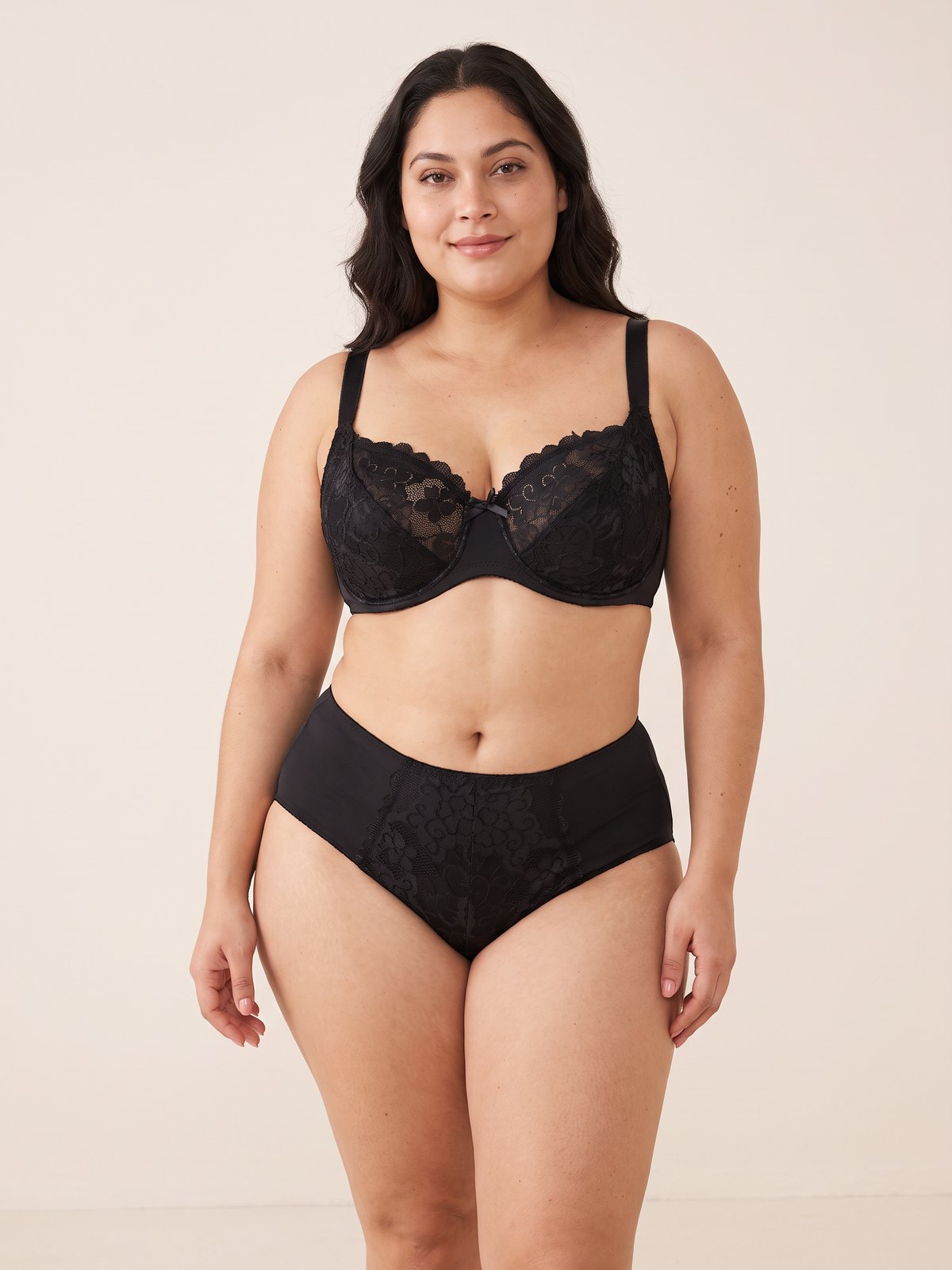
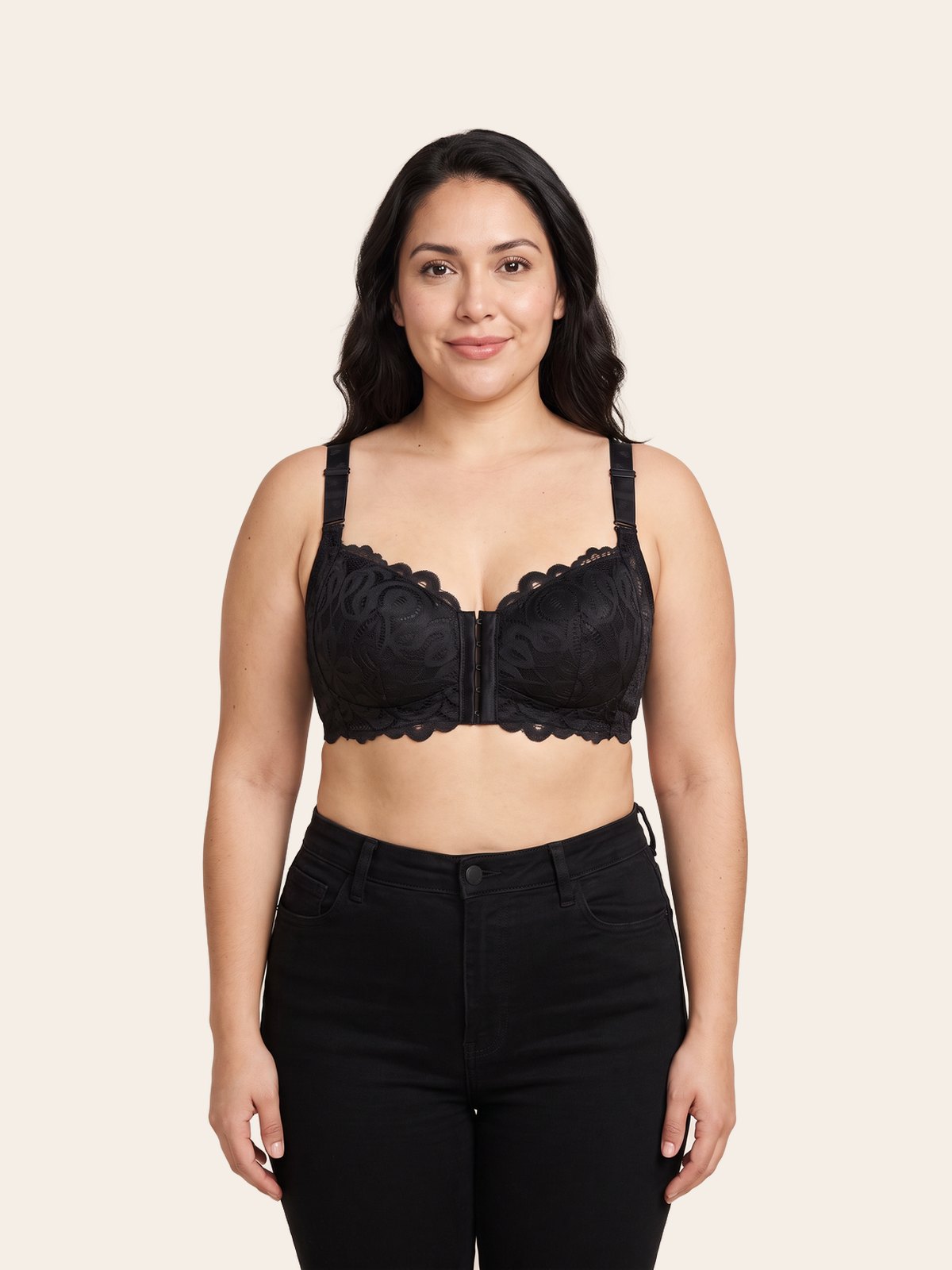
Our Lace Underwire Bra and Brief Set is one option made for this: every size is a DD cup, in bands 36 to 46 (36DD to 46DD), with nylon lace over a spandex lining and a matching brief. If you measured a D or a DDD, pick by your band and expect the cup to feel a little snugger or roomier. If you would rather not reach behind your back, the Front Close Lace Lift Bra comes in bands 34 to 50, and each band fits C to E cups. Both ship from our partner warehouse in China, so they take longer to arrive than US items. Bras are final sale, which is one more reason to measure before you order. Defects are always covered.
How often should I measure again?
Measure again any time your bras start to feel different: bands riding up, cups gapping, straps you keep tightening. Weight changes, pregnancy, nursing, new medication, menopause and new workouts can all change your size. A quick check every year is a good habit, and it takes less time than returning a bra. When the elastic is worn out, measuring will not fix it; see how long bras last for when to replace one.
Mentioned here
Questions
How do I measure my bra size at home?
Measure snugly around your ribs right under your bust for the band, then loosely around the fullest part of your bust. Subtract the band from the bust: each inch of difference is roughly one cup size.
Do you add 4 inches to your band measurement?
Most fitters no longer do. The add-4 method dates from bras made of rigid fabric, and the extra inches tend to give a band that is too loose and rides up.
What is a 5 inch difference in bra size?
On most US charts a 5 inch difference between bust and band is a DD, which some brands call an E. A 6 inch difference is a DDD, also sold as an F.
Should I measure with or without a bra?
Wear a non-padded or lightly lined bra that fits reasonably well. Heavy padding adds inches to the bust number and throws off the cup.
Why does my measured size not fit?
A tape gives a starting point, not a final answer. University of Portsmouth researchers found the tape method often overestimated band size and underestimated cup size, so always check the fit on your body.
Keep reading
Sources: University of Portsmouth via Phys.org: Traditional bra-fitting doesn't give the best fit · University of Portsmouth Research Group in Breast Health · Journelle: How to measure your bra size at home · Little Women: Why we no longer use the +4 measuring method