
The Hug Journal · Leggings & tights ·
How to wear tights in winter without freezing
How to wear tights in winter without freezing: pick the right denier or a fleece lining, layer smart, keep feet dry and build outfits that stay warm all day.
You want to wear the dress. The forecast says 30 degrees. Tights can absolutely carry you through winter, as long as you treat them like part of a layering system and not a thin afterthought. Here is how to stay warm in tights, from choosing the pair to building the rest of the outfit around it.
What denier tights are warm enough for winter?
Denier measures how thick the yarn is. Hosiery retailer Hosieree explains that a lower number means a thinner, sheerer tight and a higher number means a thicker, more opaque one. Their guide calls 10 to 20 denier sheer, 40 to 70 denier opaque and good for colder weather, and anything above 70 denier the most coverage and warmth. For most winter days, they suggest starting at 40 denier and going up from there.
UK hosiery brand Heist makes a similar case: around 60 denier for milder days, 80 for most of a cold season, and 125 for the coldest days or long stretches outside.
Are fleece-lined tights warmer?
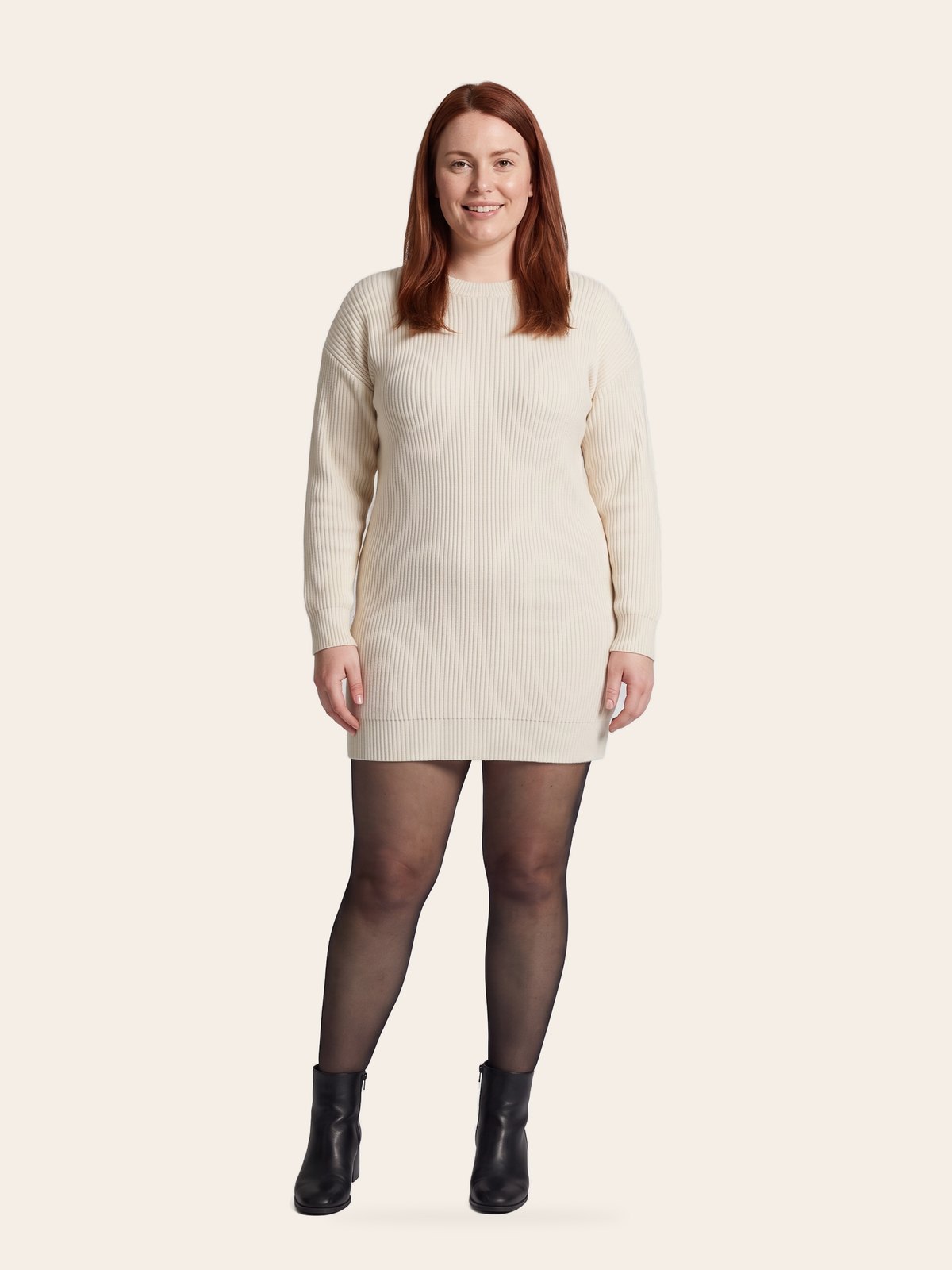
Fleece-lined tights take a different route. Instead of only thick yarn, they add a brushed fleece layer on the inside, against your skin. Many people love them for commutes and outdoor days. Heist points out the trade-off honestly: the extra lining can feel bulky under slim trousers or a fitted boot. So match the tight to the outfit. Fleece-lined for a skirt or dress with room in the boot, a slimmer opaque for under tailored pants.
If you like the look of sheer tights but not the cold, our Fleece Lined Sheer Look Tights are made for exactly this. They look sheer from the outside, have fleece on the inside, and have a high waist and a footed design.
How do I layer tights so I stay warm?
Tights work best as one layer of several. The California Department of Public Health suggests at least three loose layers in cold weather: an inner layer that pulls moisture away from skin, a middle layer that insulates, and an outer layer that blocks wind. Translated to a tights outfit:
- Inner: your tights, plus a close base top if you run cold.
- Middle: a knit dress, a wool or fleece skirt, or a sweater over a skirt.
- Outer: a coat that covers at least to mid-thigh, since the gap between hem and knee is where wind hits hardest.
- On the coldest days, a slim legging or a second thin pair under your tights adds warmth. Heist suggests this for the coldest days too.
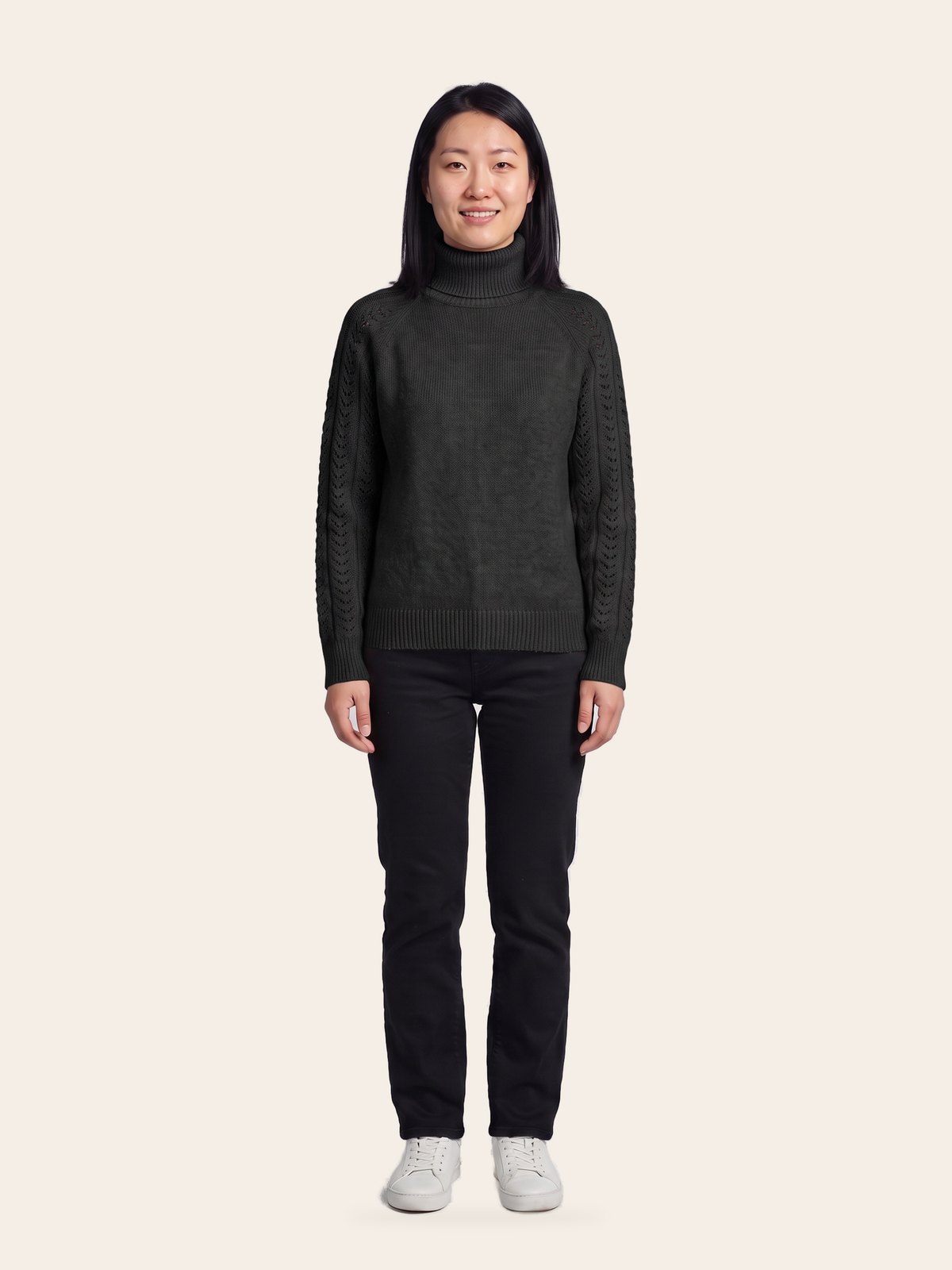
Want an easy outfit already built? The Winter Layers Set puts the tights together with a cable sleeve turtleneck and a scrunch back flare pant, so you can wear the tights under a skirt one day and under the pants the next.
How do I keep my feet and ankles warm in tights?
Feet get cold first, and tights alone do not do much against a wet sidewalk. The California Department of Public Health recommends insulated, waterproof boots in cold weather. The University of Kentucky extension service adds that wet clothing chills the body quickly. A few practical habits:
- Choose boots over flats on cold days, and make sure they are water-resistant.
- Slip a thin sock over your tights inside the boot for an extra layer at the toes.
- If your tights get wet, change them when you can. Damp fabric pulls heat away.
- Cover your head too. The California Department of Public Health notes that hats reduce the body heat that escapes from your head, and a scarf or high neckline closes the gap at your neck.
What fabrics keep legs warmest?
The University of Kentucky notes that wool, silk and synthetic fibers like polypropylene hold more body heat than cotton. Most tights are nylon and spandex blends, which is fine as a base. Where fabric choice really counts is the layer on top: a wool or knit skirt or a sweater dress will feel warmer than a thin cotton one, especially if it gets damp.
Can you overdo it?
Yes. If you sweat on a heated train or in a warm office, that moisture cools you once you step outside. The Kentucky extension advice is simple: take a layer off when you feel warm. A cardigan or a coat you can open is easier to adjust than doubled tights you cannot take off at your desk.
A quick winter tights checklist
- Pick 40 denier or higher, or a fleece-lined pair.
- Layer: tights, an insulating middle, a wind-blocking coat.
- Water-resistant boots, and a sock over the tights if your toes run cold.
- Keep everything dry, and peel off a layer before you start to sweat.
Mentioned here
Questions
What denier tights are warm enough for winter?
Hosiery retailer Hosieree recommends 40 denier or higher for cold weather, and calls tights above 70 denier the warmest, most opaque option. Fleece-lined tights add a soft inner layer on top of that.
Are fleece-lined tights warmer than regular tights?
They add a brushed fleece layer against your skin, which is why people reach for them on cold days. The trade-off is a little more bulk under slim pants or tall boots.
Can I wear tights under pants in winter?
Yes. A thin pair of tights under trousers adds a base layer, and public health guidance on cold weather recommends layers over a single heavy piece.
Why are my legs still cold in tights?
Usually it is wind, wet fabric or bare skin at the gaps. Add a tightly woven outer layer, keep tights and shoes dry, and cover the ankle with boots or socks.
Should I wear cotton tights in winter?
Cold weather guidance from the University of Kentucky notes that wool, silk and synthetics hold body heat better than cotton, and that wet fabric chills you fast.
Keep reading
Sources: Hosieree: how to pick the warmest winter tights using denier · Heist Studios: warm tights for winter · California Department of Public Health: extreme cold, what to wear · University of Kentucky Extension: winter weather, dress warmly and stay dry