
Plus size workout leggings: what to look for before you buy
How to choose plus size workout leggings: the waistband, rise, fabric, length and fit checks that stop rolling, slipping, sheerness and chafing.
The right plus size workout leggings come down to five things: a high rise with a wide waistband that does not roll, an opaque stretch knit, a seam layout that does not rub, a length that suits your height, and a size picked by your waist and hips. Get those right and you stop tugging and start moving. Here is how to check each one before you buy and in the first ten minutes you wear them.
What should I look for in plus size workout leggings?
Start with this checklist. Each point solves a complaint that comes up again and again in fitting rooms and gym locker rooms.
- Rise: high rise sits at or above your navel. Nike says high rise is the more popular choice for workouts, and it gives your waistband more surface to grip.
- Waistband: wide and flat. Nike highlights a waistband that stays put during movement, and an extra-wide one to reduce rolling and pinching.
- Fabric: a stretch knit with some weight to it. Thin, cotton-heavy fabric goes sheer faster, according to Knix.
- Seams: a gusset in the crotch or no front seam, so nothing cuts in when you lunge or sit on a bike.
- Length: full length, 7/8 (just above the ankle) or capri. Nike notes 7/8 works for both training and everyday wear.
- Pockets: side pockets that hold a phone flat against your thigh, so you are not holding it on the treadmill.
How should workout leggings fit at the waist?
Snug and quiet. When you bend, the waistband should stay where you put it without folding over or sliding down. Nike suggests a simple finger test at the waist and ankle: if more than one finger slides in easily, try a size down; if you cannot fit one finger, try a size up. If the waistband digs in and leaves a deep line after an hour, it is too small, even if it looks smooth in the mirror.
A rolling waistband is the number one leggings complaint, and it is usually a waistband problem, not a body problem. We wrote a whole guide on high-waist pants and tights that do not roll down if that is your daily fight.
What fabric is best for workout leggings?
For sweating, choose a synthetic stretch knit such as nylon or polyester with elastane. Cleveland Clinic recommends moisture-wicking fabrics over cotton when you are active, because cotton holds moisture and dries slowly, and damp fabric plus friction is how chafing starts. Cotton leggings are lovely for the couch; they are just not built for a spin class.
Weight and knit matter for coverage. Nike explains that interlock knits are usually the safest construction for opacity, and its lab tests leggings at a stand, a squat and a forward fold, because fabric that is opaque standing still can open up when stretched. If you want the full home version of that test, read how to tell if leggings are squat proof.
What size workout leggings should I get?
Measure, then match the chart. Wrap a soft tape around your natural waist (the narrowest part, usually just above your belly button) and around the fullest part of your hips. Compare both numbers to the brand's chart. If they land in different sizes, go with the larger one; leggings stretch across the hips far more comfortably than they squeeze. Our guide on how to measure yourself at home walks through it with photos of where the tape goes.
Knix warns that stretching fabric past its limit is one of the main reasons leggings turn see-through. So a pair you have to wriggle into is not "compressive," it is small. Size up.
Which leggings work for which workout?
- Walking and errands: full or 7/8 length, pockets, medium weight.
- Strength training: a stretchy, opaque knit that passes the squat test, with a gusset.
- Running and cardio: lighter, sweat-wicking fabric and a waistband that does not slip, as Nike notes.
- Yoga and stretching: soft, high-stretch fabric where comfort matters more than compression.
How do I stop leggings from chafing?
Thighs that touch are normal, and good leggings actually help, because the fabric sits between skin and skin. Chafing usually shows up where a seam sits wrong or the fabric bunches. Cleveland Clinic suggests well-fitting clothes, moisture-wicking fabric, and an anti-chafing product applied before activity. Our guide to stopping thigh chafing covers the rest.
Our leggings, honestly
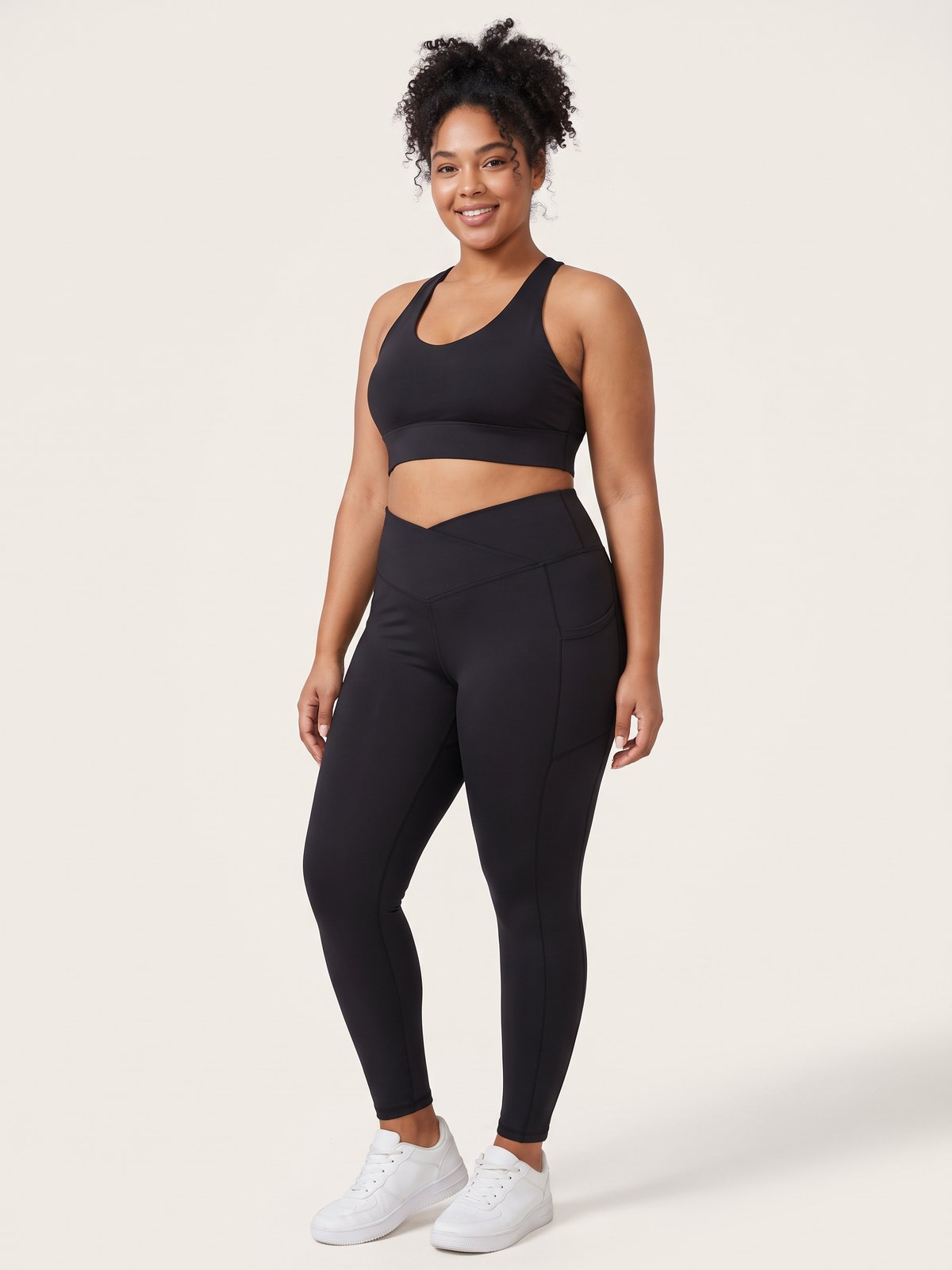
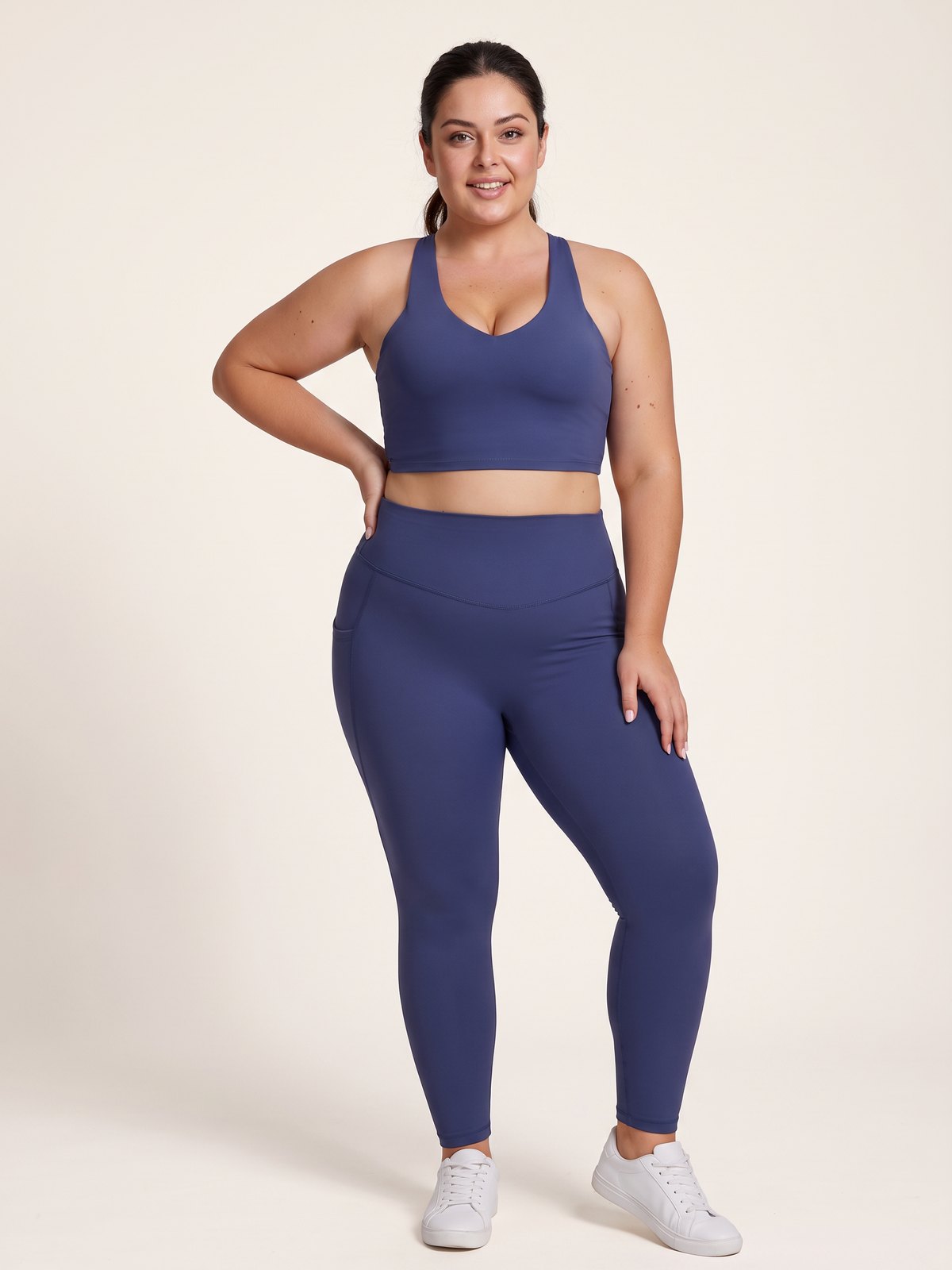
Our High Rise Pocket Leggings are made around this checklist: a wide waistband, side pockets and no front seam, in sizes S to 3XL and four colors (Onyx, Milk Tea, Mocha and Navy). The fabric is a nylon stretch knit; we have asked our supplier for exact fiber percentages and will post them when we have them. The size chart is an estimate, so choose by waist and hips and size up between sizes. They ship from our China warehouse, so they take longer to arrive than our US-stocked pieces. If you want the matching top, The Workout Set pairs them with our racerback sports bra in the same color. Leggings get one free size swap per year.
How do I make workout leggings last?
Nike recommends washing leggings in cold water and air drying them to keep their stretch, and Knix adds that dryer heat can snap the elastic and speed up sheerness. Turn them inside out, go easy on fabric softener, and hang them to dry. When a pair starts to look shiny or thin at the seat, it is time for a new one.
Mentioned here
Questions
What should I look for in plus size workout leggings?
A high rise with a wide waistband that stays put, an opaque knit with real stretch, a gusset or no front seam, and a size chosen by your waist and hip measurements, not your jeans size.
Why do my leggings roll down at the waist?
Usually the waistband is too narrow, too low or the wrong size. Nike points to high-rise styles with an extra-wide waistband to reduce rolling, pinching and sliding.
Should workout leggings be tight?
Snug, not squeezing. Nike suggests a finger test at the waist and ankle: if more than one finger slides in, size down; if you cannot fit one finger, size up.
Are cotton leggings good for working out?
They are comfortable for lounging, but cotton holds sweat. Cleveland Clinic suggests moisture-wicking fabrics over cotton for activity, and Knix notes cotton-heavy leggings tend to turn sheer sooner.
How do I keep workout leggings from going see-through?
Buy your real size, do a squat test in bright light at home, wash them cold on a gentle cycle and skip the dryer, which Knix says can break down the elastic.
Keep reading
Sources: Nike: how to pick the perfect pair of workout leggings · Nike: how to find squat-proof leggings · Knix: why leggings go see-through and what to do · Cleveland Clinic: chafing