
What to wear on a long winter flight
What to wear on a long winter flight: comfortable layers, a soft waistband, warm legs and easy shoes, plus travel health tips for moving on long flights.
A long winter flight has two weather systems: the cold jet bridge and parking lot on either end, and a dry, sometimes chilly cabin in the middle. The trick is an outfit that handles both and lets you move freely for hours. Here is what to wear, and what travel health experts suggest you do once you are in your seat.
What is the most comfortable thing to wear on a long flight?
Think in layers you control. Planes can feel warm at boarding and cold at cruising altitude, so you want to add and remove pieces in your seat without a production. A good formula:
- A soft top layer you can sleep in, like a knit sweater.
- Pants with a stretchy waistband that will not dig in while you sit.
- Something warm on your legs and feet: tights, thick socks or both.
- Shoes that slip off and on easily for security and in your seat.
- A coat or big scarf that doubles as a blanket.
Should I wear tight clothes on a plane?
Avoid anything that squeezes. Cleveland Clinic warns that shapewear that is too tight around the hips can restrict blood flow to the lower legs, and its rule of thumb is simple: if it leaves a mark, it is too tight. A long flight is many hours of sitting, so this is the day to leave firm shapewear at home and choose pieces that stretch with you. The same test works for tights, jeans and socks.
How do I stay warm on a cold flight?
Keep your warmth close to your body and easy to adjust. A turtleneck keeps your neck warm without a scarf to manage. Warm tights under pants keep your legs comfortable when the cabin cools down. And your coat can go over you like a blanket once you are seated.
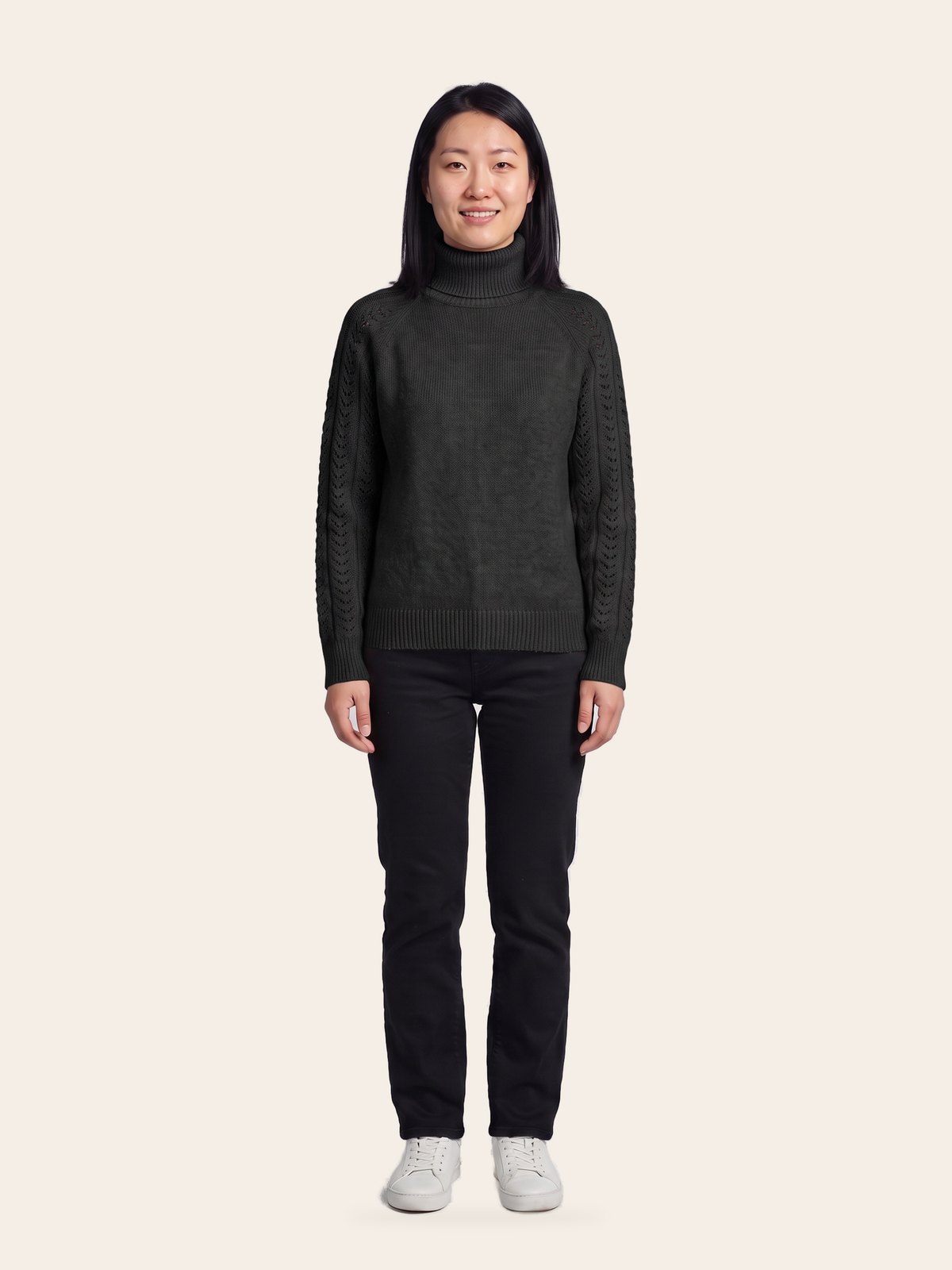
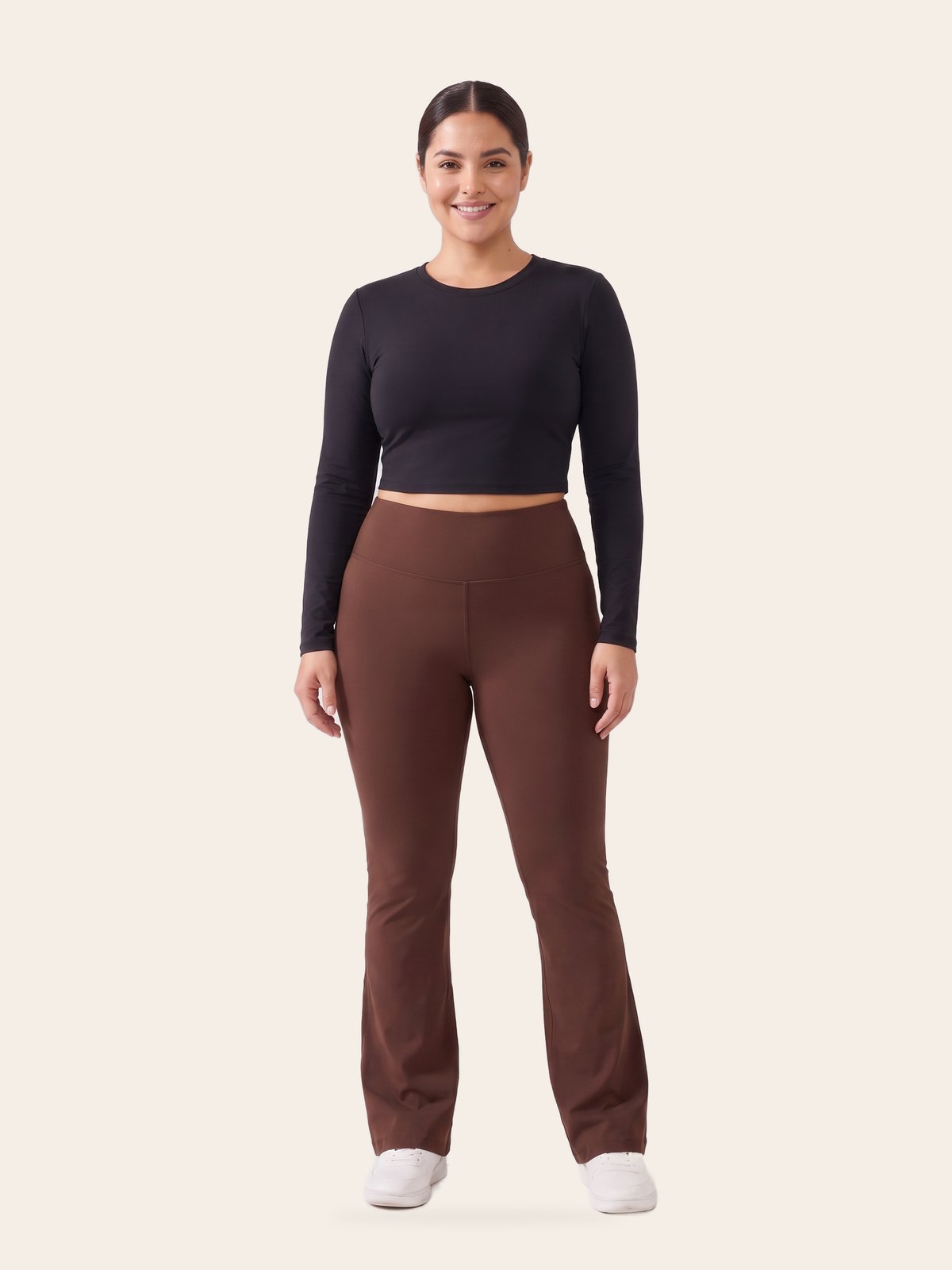
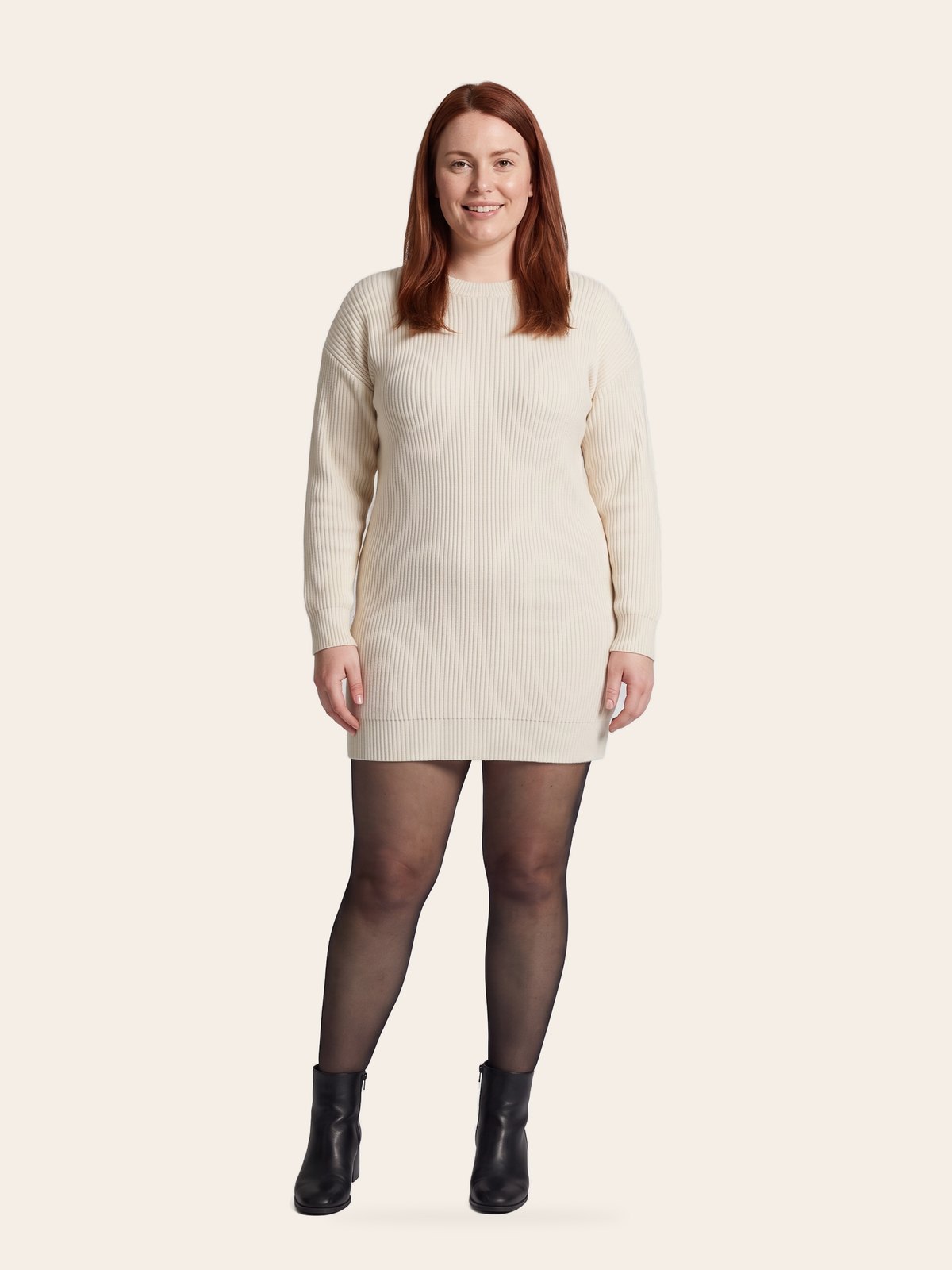
The Winter Layers Set is one option made for exactly this kind of day: our Cable Sleeve Turtleneck Sweater has a relaxed body and hip length, the Scrunch Back Flare Pant has a high, wide waistband in a smooth, stretchy nylon blend, and the Fleece Lined Sheer Look Tights are fleece inside. Size the tights by the weight note on the product page. If you are in the overlap between sizes, choose Plus for a softer fit, which matters on a long flight.
How do I avoid blood clots on a long flight?
The CDC Yellow Book explains that long-distance air travel is usually defined as more than four hours, and that the risk of a blood clot grows with the length of travel and with personal risk factors. For most healthy travelers the risk is low, but the advice is easy to follow:
- Get up and walk the aisle when it is safe to do so. The CDC calls frequent walking reasonable for long-distance travelers.
- Do calf exercises in your seat. NHS travel health advice suggests flexing and extending your ankles to encourage blood flow.
- Choose an aisle seat if you can. The CDC notes aisle seats are reported to be protective compared with window or middle seats.
- Keep bags out of your foot space, so they do not limit your leg movement.
- Limit alcohol and skip sleeping pills, which NHS travel advice says may make you less likely to move.
Compression stockings are a medical choice. The CDC Yellow Book says properly fitted below-the-knee stockings may be advised for travelers at increased risk, and are not recommended for those who are not. If you have had a clot, recent surgery or are pregnant, NHS travel advice says to talk to your doctor before you go.
Why does my skin feel so dry on a plane?
The CDC notes that cabin humidity is usually 10 to 20 percent, which can dry your eyes and upper airway. Bring a small moisturizer, lip balm and an empty water bottle to fill after security, and dress in soft fabrics that feel good on dry skin.
A quick packing list
- Warm, stretchy outfit you can sit in for hours.
- Thick socks for the cabin.
- Scarf or wrap that works as a blanket.
- Moisturizer, lip balm and an empty water bottle.
- Any medicine in your carry-on, not your checked bag.
Mentioned here
Questions
What is the most comfortable thing to wear on a long flight?
Soft layers you can add or remove, a waistband that does not dig in, warm socks or tights and shoes that are easy to slip off and on. Comfort that lets you move matters more than any single piece.
Should I wear shapewear on a long flight?
It is usually better to skip firm shapewear for many hours of sitting. Cleveland Clinic warns that shapewear that is too tight around the hips can restrict blood flow to the lower legs, and says that if it leaves a mark, it is too tight.
How do I avoid blood clots on a long flight?
The CDC Yellow Book calls frequent walking and calf exercises reasonable for long-distance travelers, and notes that aisle seats are reported to be protective. Talk to your doctor before you fly if you have risk factors.
Should I wear compression socks on a flight?
The CDC Yellow Book says properly fitted below-the-knee compression stockings may be advised for travelers at increased risk, but are not recommended for travelers who are not. Ask your doctor which applies to you.
Why do I feel so dry on a plane?
Cabin air is dry. The CDC notes cabin humidity is usually 10 to 20 percent, which can dry out your eyes and upper airway.
Keep reading
Sources: CDC Yellow Book: deep vein thrombosis and pulmonary embolism in travelers · CDC Yellow Book: air travel and cabin environment · NHS fitfortravel: deep vein thrombosis and travel · Cleveland Clinic: a doctor's advice on wearing shapewear