
Faja vs waist trainer: what is the difference?
Faja vs waist trainer: what each one is, how they feel, what doctors say about tight compression, and why neither one changes your body. An honest guide.
You have seen both words on social media, sometimes for the same product. Faja, waist trainer, cincher. Are they the same thing? Not really. Here is the honest difference, what doctors say about each, and how to pick the one that fits the way you actually want to feel in your clothes.
What is a faja?
In Spanish, faja simply means a girdle or shaping garment. Today the word usually means a body shaper that covers the torso and often the hips and thighs, with hook-and-eye closures, a zipper or both. Many are bodysuit style, with straps over the shoulders and legs that stop at mid-thigh. The job of a faja is to smooth: fewer bumps and lines under a fitted dress or pants, and a held-in feeling some people find comforting.
What is a waist trainer?
A waist trainer is a band that wraps the middle of your body. Cleveland Clinic describes them as undergarments made of spandex, nylon or latex, often with Velcro or belt-like straps and sometimes plastic or steel boning, worn to create an hourglass shape. The Hospital for Special Surgery calls a waist trainer a shapewear product that compresses the waist.
The big difference is intent. Cleveland Clinic explains that shapewear is mainly a temporary option for smoothing clothing lines or creating a look for a specific occasion, while waist trainers are meant for long-term wear and use more constrictive materials. The word training suggests the garment will change your shape over time. It will not.
Do waist trainers or fajas change your body?
No, and anyone who says otherwise is selling something. Cleveland Clinic hepatologist Dr. Jamile Wakim-Fleming says waist trainers cannot permanently train the waist to become slimmer. Compression can make the waist look smaller while you wear one, and that effect ends when you take it off. The same is true of a faja. It changes how fabric sits on you for the day. It does not change you.
Cleveland Clinic also points out that modern stretchy shapewear will not permanently narrow the ribcage or move organs the way Victorian corsets could. That is reassuring, and it is also a reminder: a garment is a garment.
Are waist trainers bad for you?
Doctors are more cautious about waist trainers because they are tighter and worn longer. Cleveland Clinic lists these concerns:
- Breathing. Compression of the ribs and sternum can make it hard to take a full breath.
- Digestion. Squeezing the middle can add to gas and bloating, and extended use may make acid reflux and heartburn worse.
- Skin. Non-breathable material plus sweat can cause itching and irritation, especially with sensitive skin or a latex allergy.
- Muscles. Dr. Wakim-Fleming says long-term use can reduce muscle strength. An HSS physiatrist adds that when a trainer holds your waist in place, your core muscles may not work and can get weaker.
Cleveland Clinic advises wearing a waist trainer only occasionally, for a couple of hours at most, never overnight and not on consecutive days. Stop right away if you notice worse reflux, food coming back up, trouble breathing or leg swelling.
Is a faja safer than a waist trainer?
Any garment that is too tight can cause problems, faja included. Cleveland Clinic says skin irritation is the most likely issue with shapewear, and that ultra-tight pieces can press on nerves and cause tingling or numbness, or slow circulation to the legs. Their doctor gives a simple test: if it makes a mark, it is too tight. Size up if it hurts, especially at the hips, and do not sleep in it.
So the safer choice is less about the label and more about fit. A faja in the right size, worn for the day and taken off at night, is a very different experience from a trainer cinched as tight as it goes.
Which one should I choose?
- Choose a faja if you want smooth lines under clothes for a day out, coverage from bust or waist down to mid-thigh, and support you can adjust.
- Skip the idea of training. If a product promises inches lost or a new shape over time, that is a claim doctors do not support.
- Pick comfort over tightness. You should be able to breathe, sit, eat and move. Cleveland Clinic notes the right size also gives a smoother look under clothes.
If you want a bodysuit-style faja, our Smoothing Faja Bodysuit is one option made for this. It has a 3-level hook-and-eye front so you choose how firmly it holds, wide adjustable straps, a zipper crotch and silicone lace bands at the leg. If you want coverage that goes up over the bust, the Full Coverage Overbust Faja has wide straps, flexible steel bones through the middle, inner hooks under an outer zipper and lace bands at the leg. Both are for smoothing under clothes, not for changing your body.
When should I talk to a doctor?
If you have acid reflux, Dr. Wakim-Fleming notes that looser clothing is often the first recommendation. Cleveland Clinic also says increased belly pressure could worsen pelvic organ prolapse in women over 50. If you have reflux, circulation problems, a pelvic floor condition or you are recovering from surgery, ask your own doctor before wearing any compression garment.
Mentioned here
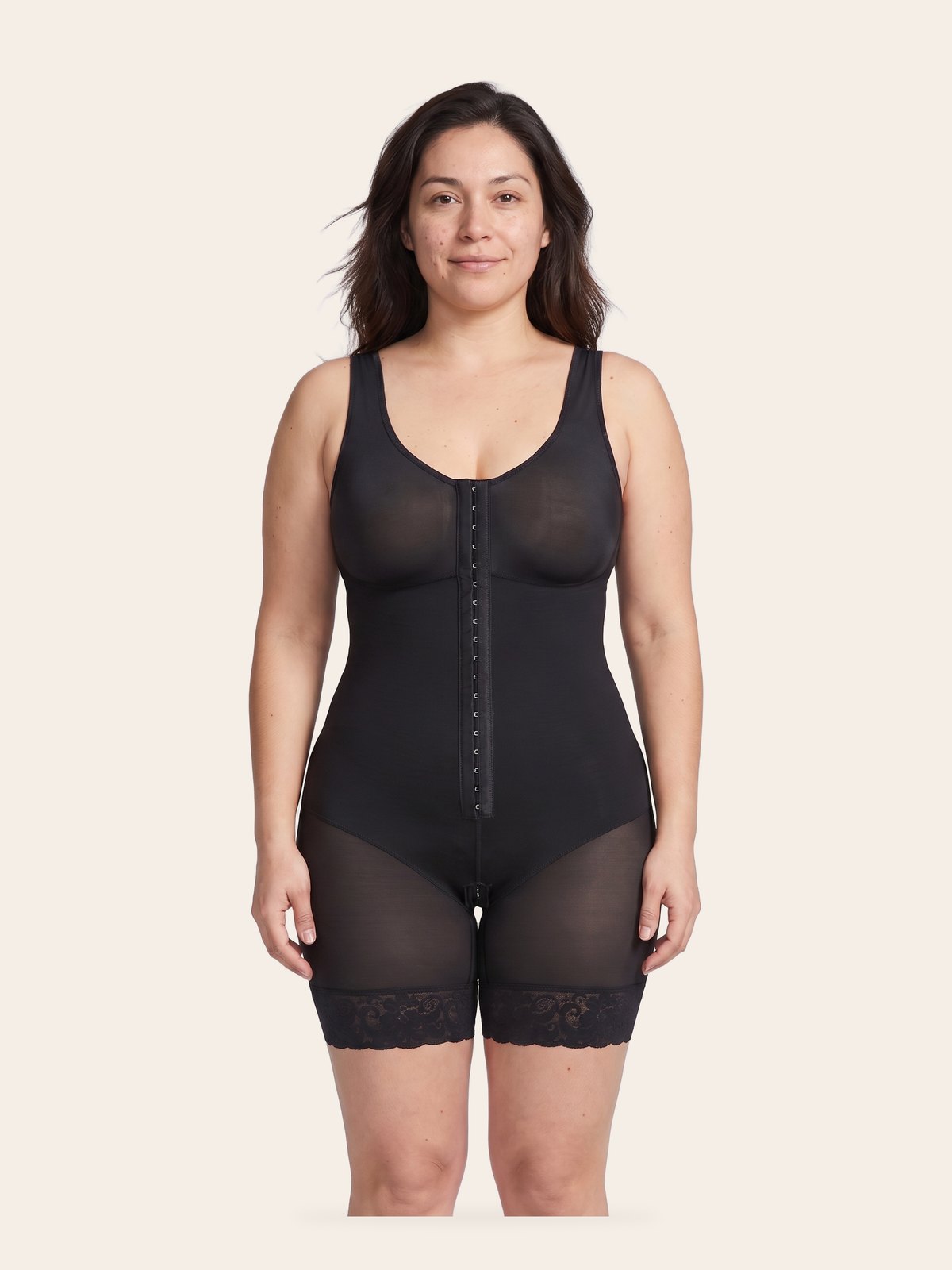
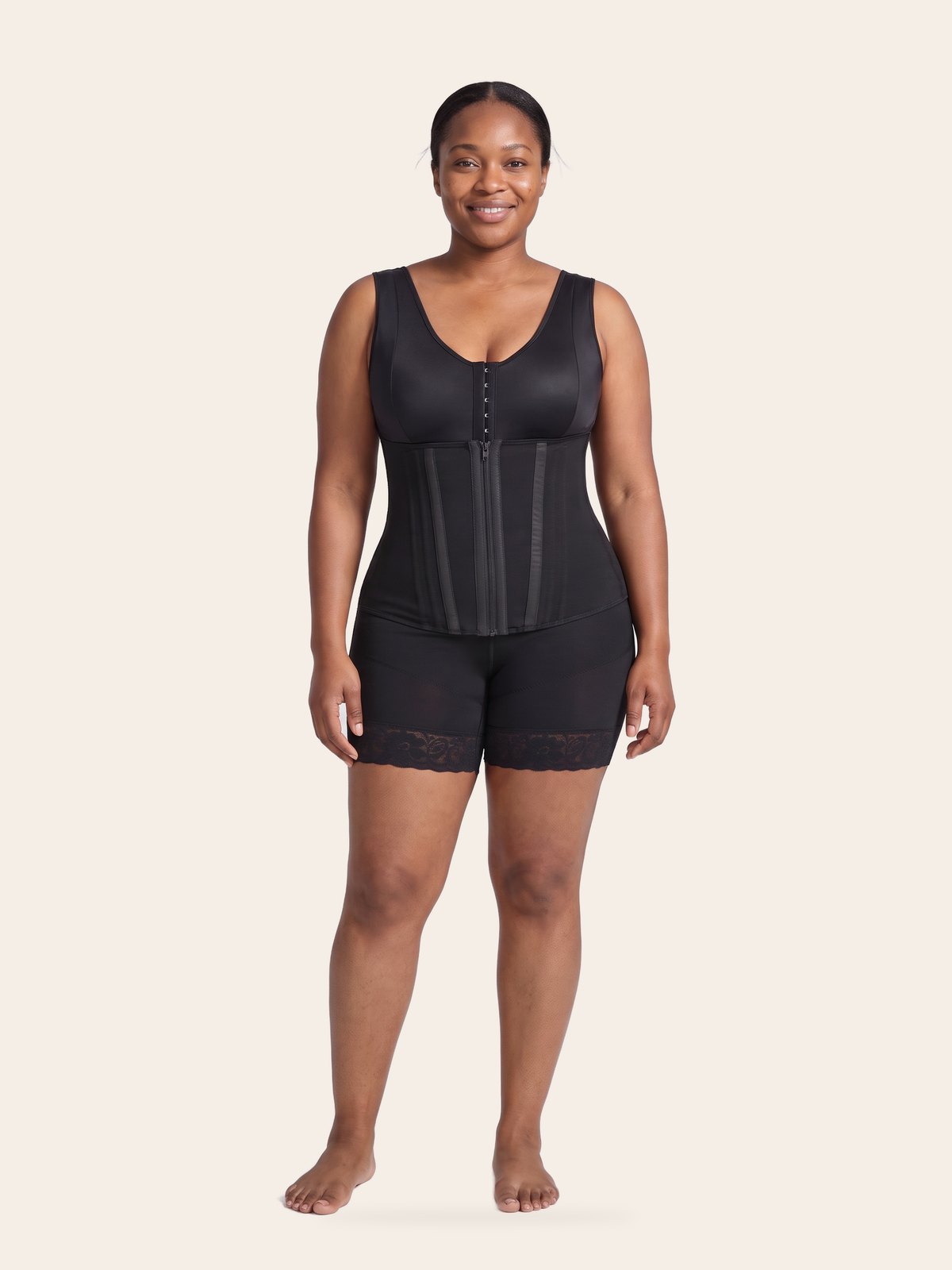
Questions
Is a faja the same as a waist trainer?
Not quite. A faja is a shaping garment that usually covers the torso and often the hips and thighs, while a waist trainer is a tighter band around the middle, often with straps or boning. Cleveland Clinic notes that waist trainers are meant for long-term wear and use more constrictive materials than everyday shapewear.
Do waist trainers make your waist smaller permanently?
No. A Cleveland Clinic hepatologist says waist trainers cannot permanently train the waist to become slimmer. Any change in how your waist looks lasts only while you wear it.
Does a faja change your body?
No. A faja smooths the way clothes sit while you wear it. Cleveland Clinic explains that modern stretchy shapewear will not permanently move organs or narrow the ribcage, and it also will not reshape you.
How long can I wear a waist trainer?
Cleveland Clinic advises using a waist trainer only occasionally, such as for a special event, for a couple of hours at most, and not overnight or on back-to-back days.
What are the signs a faja or trainer is too tight?
Cleveland Clinic lists trouble breathing, worse reflux, tingling or numbness and leg swelling as reasons to stop. A simple rule from their doctor: if it leaves a mark, it is too tight.
Keep reading
Sources: Cleveland Clinic: do waist trainers work? · Cleveland Clinic: a doctor's advice on wearing shapewear · Hospital for Special Surgery: waist trainers, a waste of money and potentially harmful