
The Hug Journal · Sleep ·
Does a satin bonnet protect your hair while you sleep?
Does a satin bonnet protect your hair? What dermatologists advise for curly and coily hair at night, where the evidence is thin, and how to wear one safely.
Ask anyone with curls, coils or braids and you will hear the same advice: cover your hair at night. A satin bonnet is the simplest way to do it. Here is what dermatology sources actually say, and where the proof runs out.
Does a satin bonnet protect your hair?
Dermatologists do suggest it, mainly for one reason: friction. Patient guidance from the British Association of Dermatologists (BAD), written with the British Hair and Nail Society, says to loosely plait or twist your hair at bedtime and cover it with a satin or silk cap or scarf. The same leaflet says sleeping on a satin or silk pillowcase reaches the same goal of minimizing friction.
The idea is simple. Instead of your hair rubbing against a cotton pillowcase every time you turn over, it rests inside smooth fabric all night.
Why does friction matter for curly and coily hair?
Tightly curled hair tends to be drier, and dry hair breaks more easily. The BAD leaflet explains that the curl pattern makes Afro-textured hair drier and more likely to get breakage and split ends, and that even passing a comb through it can cause breakage. A patient leaflet from St George's University Hospitals in London adds that research has found Afro-textured hair to be more fragile than other hair types, and that a lack of moisture can lead to breakage even at low levels of tension.
Both leaflets also say a satin wig cap is less likely to cause frictional damage than a cotton or nylon one. BAD adds that satin is less likely to absorb moisture from the hair, which lowers the risk of dryness.
What the evidence does not show
Here is the honest part. This advice comes from expert consensus and patient leaflets, not from large studies that compared bonnets with bare pillows over months. A 2021 clinical report in the journal Skin Appendage Disorders noted that silk scarves, bonnets and pillows are widely advocated for hair at night, but that there is no evidence-based data behind them. We could not find a controlled study showing that a bonnet reduces breakage.
So think of a bonnet as low-risk, sensible protection. It will not regrow hair, and it will not undo damage that is already there.
Can a bonnet be too tight?
Yes, and this part matters. The same 2021 report warned that tight-fitting head wraps at night can themselves contribute to traction alopecia, which is hair loss from steady pulling. It described patients whose hair loss matched where tight rollers or a tight ponytail sat while they slept. The authors suggest one simple question: how do you wear your hair when you sleep?
- The band should be snug enough to stay on, but it should never ache, pull or leave a deep dent at your hairline.
- Skip tight rollers and high, tight ponytails under the bonnet.
- Loose plaits or twists are what dermatology guidance suggests.
- If you notice thinning at your edges or temples, see a dermatologist. The 2021 report notes that catching traction hair loss early can help reverse it.
How to wear a bonnet at night
- Detangle gently first. The American Academy of Dermatology says to comb textured hair or tight curls while damp, with a wide-tooth comb, and to avoid pulling and tugging.
- Loosely plait or twist your hair.
- Put the bonnet on so it covers your hairline and all of your hair, with room inside so nothing gets crushed.
- If your bonnet tends to come off, add a satin or silk pillowcase as a backup.
- Wash it as its care label says.
Choosing a bonnet that stays on
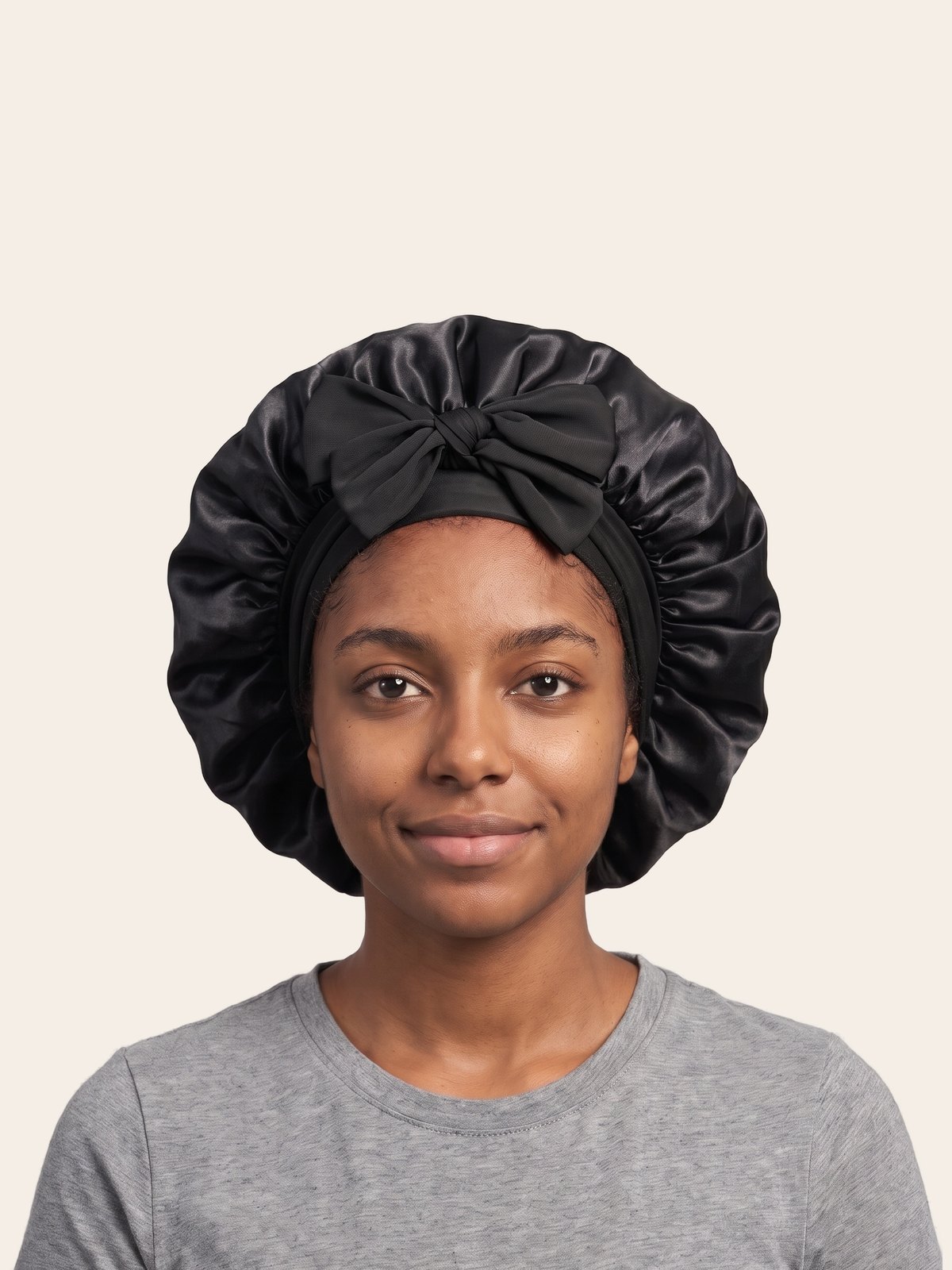
The most common complaint is waking up with the bonnet on the floor. Our Satin Sleep Bonnet is extra roomy, with a wide elastic band plus long ties you knot at the front. Tie them so they feel secure, not tight, so you get hold without pressure on your edges. It is one size, double layer, and made to fit curls, braids and long hair. Care is easy: hand wash cold and hang dry.
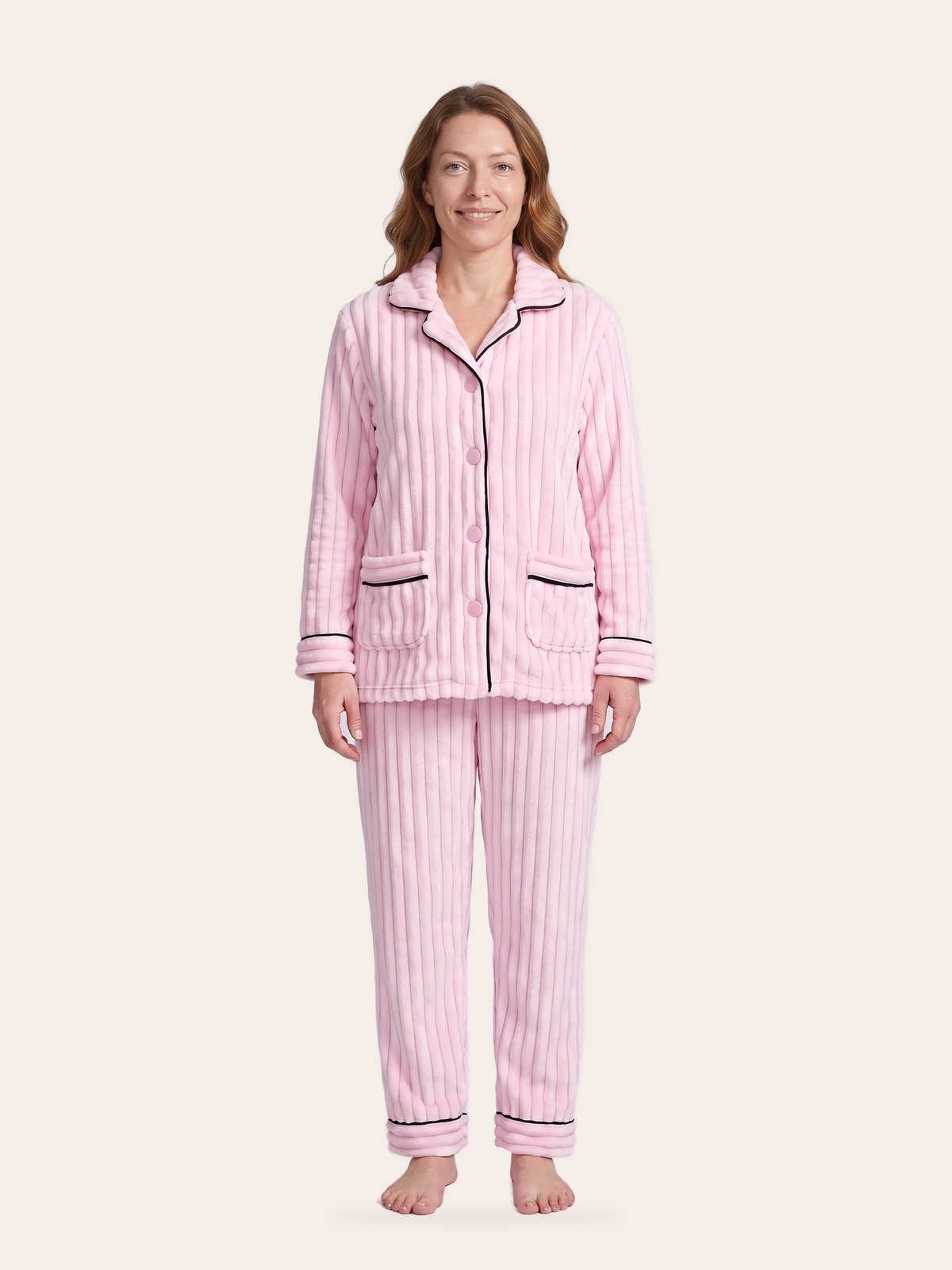
It also comes in The Cozy Night Set, with our plush fleece pajamas and long robe, if you want the whole bedtime routine in one box.
A bonnet is not magic. It is a smooth, simple layer between your hair and your pillow, and dermatologists suggest it. Keep it comfortable, keep your hair loosely styled, and let it do its quiet job.
Mentioned here
Questions
Is sleeping in a satin bonnet good for your hair?
Dermatology patient guidance recommends covering your hair at night with a satin or silk cap or scarf to cut down on friction, especially for curly and Afro-textured hair. Large studies are missing, so think of it as sensible protection, not a treatment.
Is a satin pillowcase as good as a bonnet?
The British Association of Dermatologists says a satin or silk pillowcase achieves the same goal of minimizing friction. Many people use both, in case the bonnet slips off during the night.
Can wearing a bonnet cause hair loss?
A tight one can. A 2021 clinical report warned that tight-fitting head wraps at night can contribute to traction alopecia, so the band should never pull, ache or leave a deep mark.
Should I wear my hair up or down under a bonnet?
Dermatology guidance suggests loose plaits or twists under the cap. Avoid tight rollers or a high, tight ponytail overnight, which have been linked to traction hair loss.
Is silk better than satin for hair?
The dermatology leaflets we read recommend satin or silk side by side and do not rank one above the other.
Keep reading
Sources: British Association of Dermatologists: Caring for Afro-textured hair (patient leaflet, 2023) · St George's University Hospitals NHS: Afro-textured hair leaflet (2024) · Samrao, McMichael, Mirmirani. Nocturnal traction, Skin Appendage Disorders (2021) · American Academy of Dermatology: hair care habits that can damage your hair