
Comfortable winter work outfits that last all day
Comfortable winter work outfits for a cold office and commute: how to layer, what to wear on your legs, easy outfit formulas and how to adjust all day.
Winter work days have two climates: a freezing commute and an office that is either too warm or, more often, too cold. The goal is an outfit that looks put together at 9 a.m. and still feels good at 5 p.m. Here is how to build one.
Why does the office feel so cold?
You are not imagining it. OSHA does not require a specific office temperature, but it recommends keeping indoor temperature in the range of 68 to 76 degrees Fahrenheit. That is a wide range, and where your office lands in it matters.
A 2015 study in Nature Climate Change by researchers at Maastricht University argued that common indoor comfort standards are based on an average male metabolic rate, and may overestimate women's metabolic rate by up to 35%. As reported by Phys.org, the women in the study preferred about 75 degrees, compared with about 70 for men. The sample was only 16 women, and other researchers noted it is too small for firm conclusions. Still, it explains why so many women keep a cardigan at their desk.
How should I layer for work in winter?
Think in layers you can add and remove. The California Department of Public Health recommends layering for cold weather, with an inner layer, an insulating middle layer and a wind-resistant outer layer. For a work day, that looks like:
- Base: a bodysuit or a fitted long-sleeve top that stays tucked.
- Middle: a sweater or turtleneck that looks finished on its own.
- Desk layer: a cardigan or blazer you can take on and off.
- Outer: a warm coat for the commute.
The key word is remove. The University of Kentucky extension advises taking a layer off when you feel warm, because sweat increases heat loss. If you sweat on a packed train and then sit under an air vent, you will feel colder than if you had dressed lighter.
What do I wear on my legs?
Legs are often the coldest part of a work outfit, especially in a skirt.
- Under a skirt or dress: opaque tights at 40 denier or more, or fleece-lined tights.
- Under trousers: a thin pair of tights adds a layer without bulk.
- Pants: a high waistband that does not dig in when you sit is worth more than any trend.
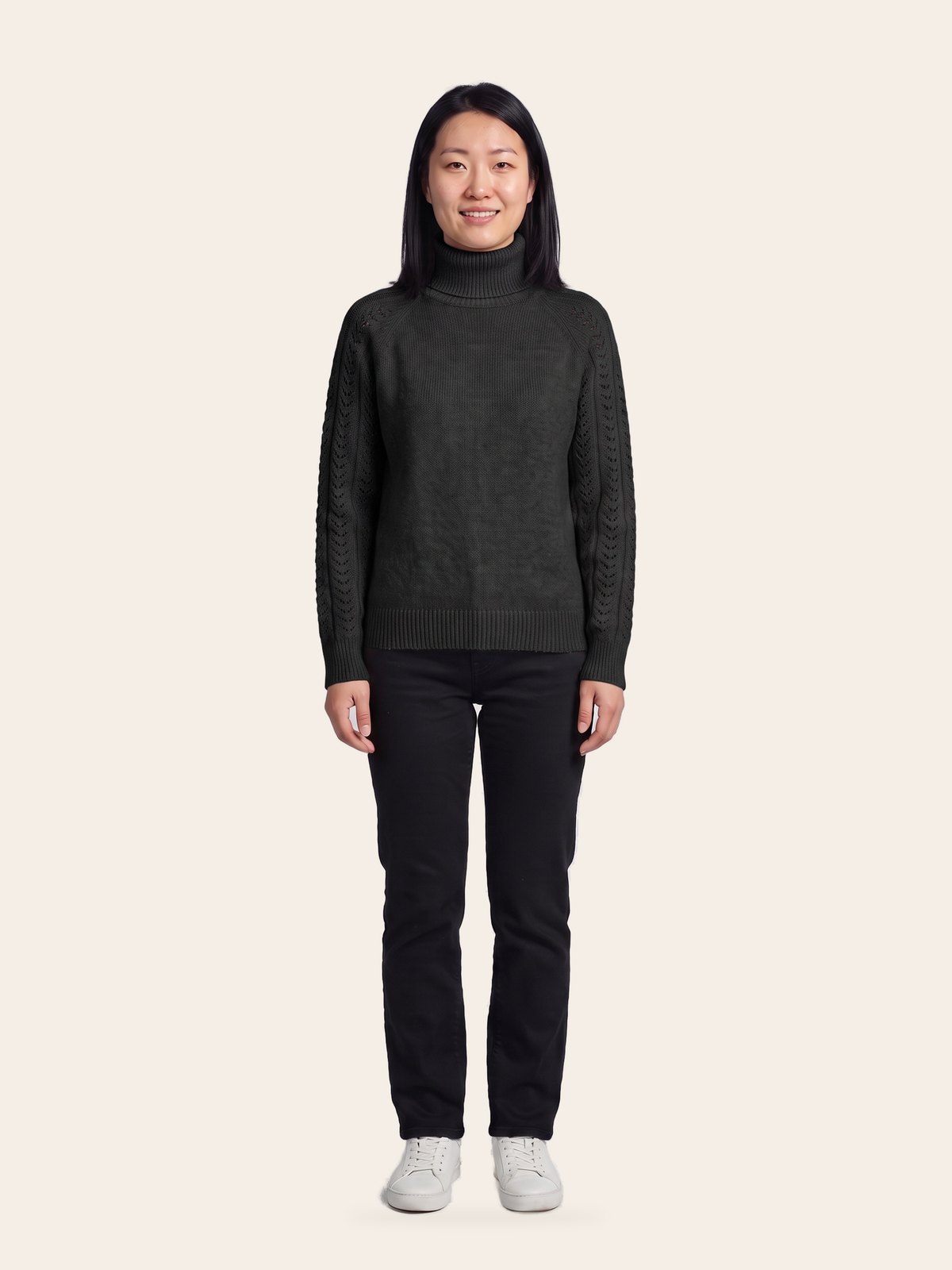
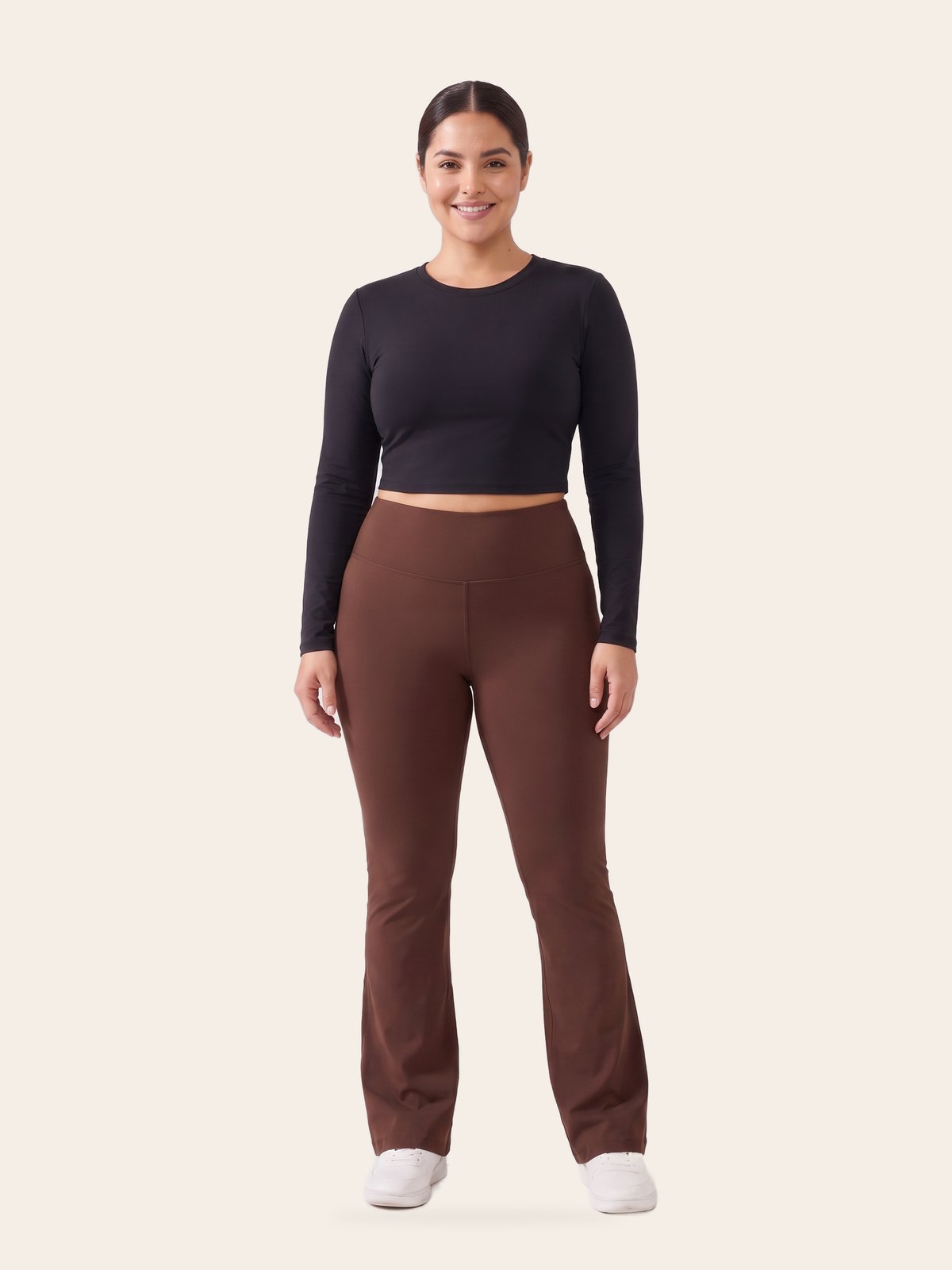
Comfort through a long day of sitting comes down to the waist. Our Scrunch Back Flare Pant is one option made for this, with a high, wide waistband and a stretchy nylon blend, fitted through the hip and flaring from the knee so it falls over ankle boots.
5 comfortable winter work outfits
- Turtleneck, flare pants, ankle boots, long coat. Warm, polished and easy to move in.
- Bodysuit, tailored trousers, cardigan, loafers. The bodysuit stays tucked all day.
- Sweater dress, fleece-lined tights, knee or ankle boots, blazer.
- Turtleneck under a pinafore or slip dress, opaque tights, block heel boots.
- Fine knit, straight jeans (if your office allows them), blazer, lug-sole loafers.
Outfit one is exactly The Winter Layers Set: the Cable Sleeve Turtleneck Sweater, the flare pant and a pair of fleece-lined tights, so you can wear the tights under the pants on the coldest days or under a skirt on another.
How do I keep warm on the commute?
- Water-resistant boots. The California Department of Public Health recommends insulated, waterproof footwear in cold weather.
- A hat. The same guidance notes hats reduce the body heat that escapes from your head.
- Mittens or gloves. The Kentucky extension notes that mittens are warmer than gloves.
- Change shoes at your desk if your feet get warm or damp in boots.
What should I keep at my desk in winter?
A small comfort kit saves the day when the thermostat does not cooperate. Keep a cardigan or a soft wrap you can pull on over anything. Keep a spare pair of tights or socks in a pouch, in case the commute leaves yours damp. If your office allows it, keep a pair of comfortable flats or loafers so you can take off wet boots. And keep a scarf: a turtleneck or scarf covers the neck, which is often the first place you feel a vent. None of this changes your outfit, and all of it makes the afternoon easier.
Quick tips for all-day comfort
- Choose a turtleneck or high neckline when your desk is near a vent.
- Keep a cardigan or wrap at work.
- Pick waistbands you can sit in for hours.
- Swap a damp layer for a dry one as soon as you can.
Keep going: What to wear to a holiday cookie swap: cozy party-at-home outfits and Comfy outfits you can wear out: lounge to errands in 5 minutes.
Mentioned here
Questions
Why is my office always so cold?
One reason may be how thermostats are set. A 2015 study in Nature Climate Change argued that common comfort standards use an average male metabolic rate and may overestimate women's by up to 35%. The sample was small, so treat it as a clue, not a rule.
What temperature should an office be?
OSHA does not set a required office temperature, but it recommends keeping indoor temperature in the range of 68 to 76 degrees Fahrenheit.
How do I dress for a cold office in winter?
Wear layers you can take off: a base, a warm middle like a sweater, and a jacket or cardigan. The University of Kentucky extension suggests removing a layer when you get warm, since sweat makes you lose heat.
Can I wear tights to work in winter?
Yes. Opaque or fleece-lined tights under a skirt or dress, or a thin pair under trousers, add a layer on your legs without changing your outfit.
What shoes are comfortable for winter work days?
Water-resistant ankle boots for the commute, and a pair of comfortable flats or loafers at your desk if your office allows it.
Keep reading
Sources: OSHA: frequently asked questions on indoor temperature · Phys.org: office thermostat settings and female thermal demand (Nature Climate Change, 2015) · University of Kentucky Extension: winter weather, dress warmly and stay dry · California Department of Public Health: extreme cold, what to wear