
The Hug Journal · Sleep ·
What to wear to bed to sleep better
What to wear to bed to sleep better: the bedroom temperature sleep experts suggest, why your body cools at night, and how to pick pajamas, socks and layers.
Good sleep starts before you close your eyes, and part of it is what you put on. There is no perfect pajama for everyone. The goal is simple: stay comfortable, not too hot and not too cold, while your body cools down for the night.
Why does temperature matter for sleep?
The Sleep Foundation explains that your core body temperature naturally drops to prepare for sleep. That drop starts about two hours before bedtime, keeps going through the night and reaches its lowest point in the early morning. A room that is too warm can get in the way of that cooling, which can mean poorer and shorter sleep.
What is the best bedroom temperature for sleep?
The Sleep Foundation puts the best room temperature at about 65°F (18.3°C), and notes that sleep experts typically recommend somewhere between 60 and 68°F. Your ideal may be a few degrees off, and the researchers it cites stress adjusting for your own needs. Older adults, for example, often have more trouble staying warm.
What you wear works together with the room. In a cool room, warmer sleepwear lets you keep the thermostat down. In a warm room, less is more.
What should you wear to bed in winter?
For cold nights and cool bedrooms, the Sleep Foundation suggests pajamas and blankets that are thicker, heavier or made of insulating materials, so you can stay warm without turning up the heat.
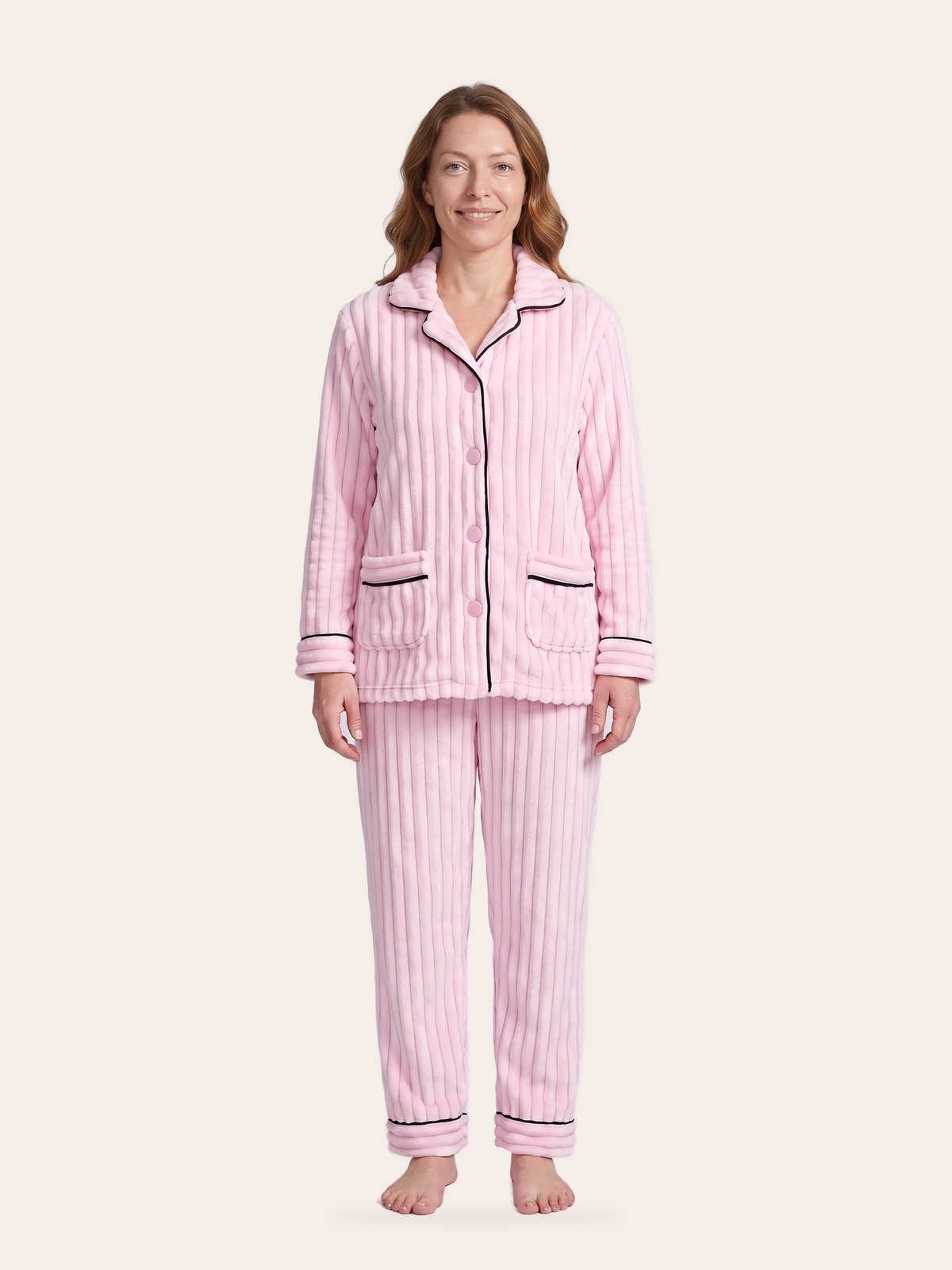
That is the job of our Striped Plush Fleece PJ Set: a button-front top and long pants in soft plush fleece, with a relaxed fit and an elastic waist. We think relaxed matters at night. Nothing should dig in at the waist or pull across your back when you turn over.
What should you wear to bed if you run hot?
If you wake up sweaty, go lighter. The Sleep Foundation lists pajamas, along with sheets and other bedding, among the choices that help with temperature regulation and less sweating. On warm nights, a lighter layer and a lighter blanket make sense.
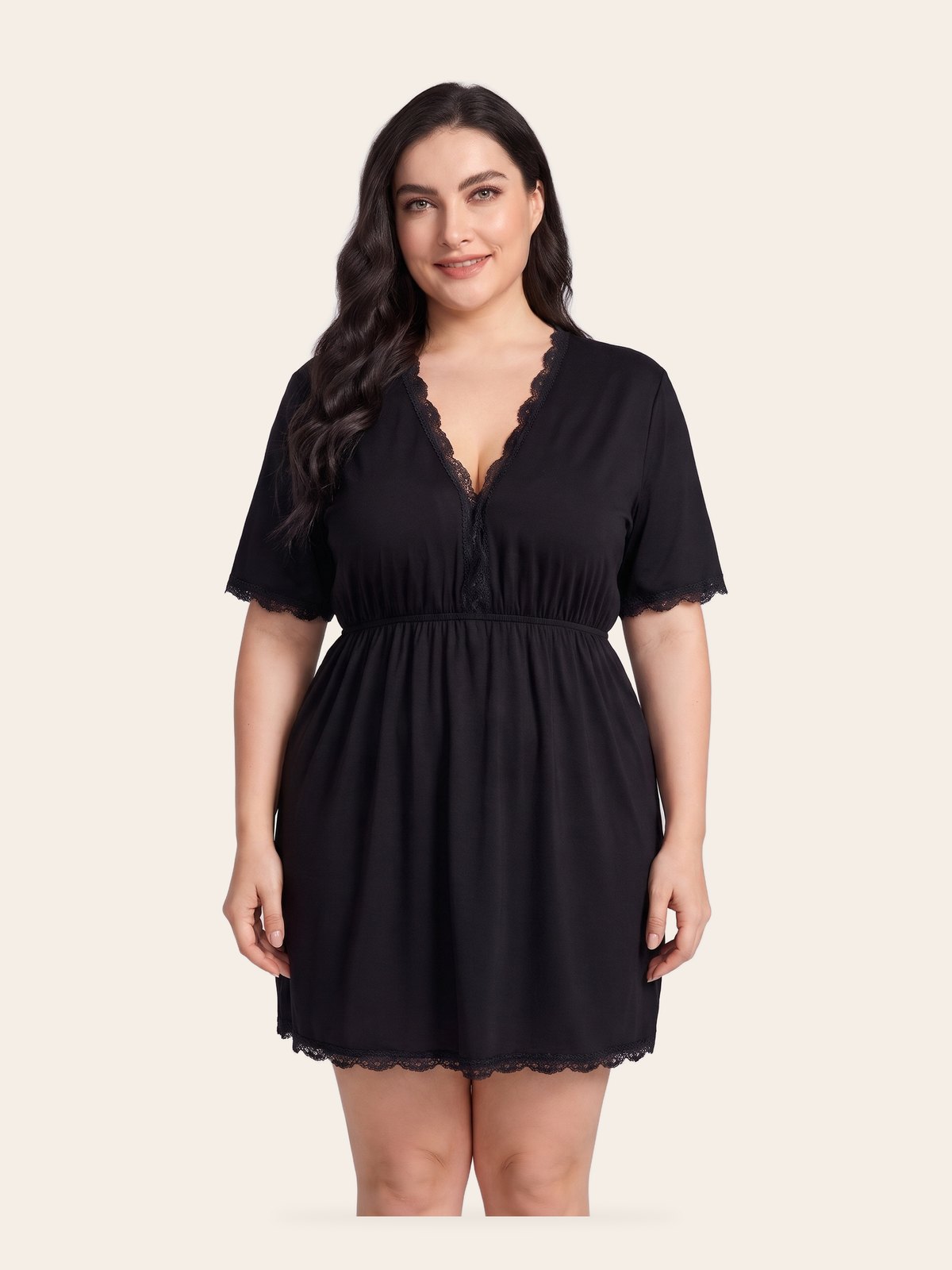
Our Lace Trim Sleep Dress is one lighter option: short sleeves, a V-neck, a relaxed fit with a gathered waist, and a hem above the knee, in sizes XL to 5XL. Fabric feel is personal, so notice what feels coolest on your own skin and go with that.
Should you wear socks to bed?
Maybe. Your hands and feet help your body let go of heat at night. The Sleep Foundation explains that warming the feet can widen the blood vessels there, which may help your core temperature drop faster, and it notes that people with chronically cold feet may be at higher risk of trouble falling asleep.
- Pick loose socks that do not squeeze. Skip compression socks for sleep.
- Choose socks that do not hold moisture, and change them every night.
- If you have circulation problems or swelling in your feet, ask your doctor first.
Why layers help you sleep better
Your temperature is not the same all evening. The Sleep Foundation notes that blankets create small climates around you, so you can adjust by adding or removing one. The same idea works for clothes. A robe keeps you warm on the couch, at the bathroom sink or on an early walk to the kitchen, and it comes off before you get into bed.
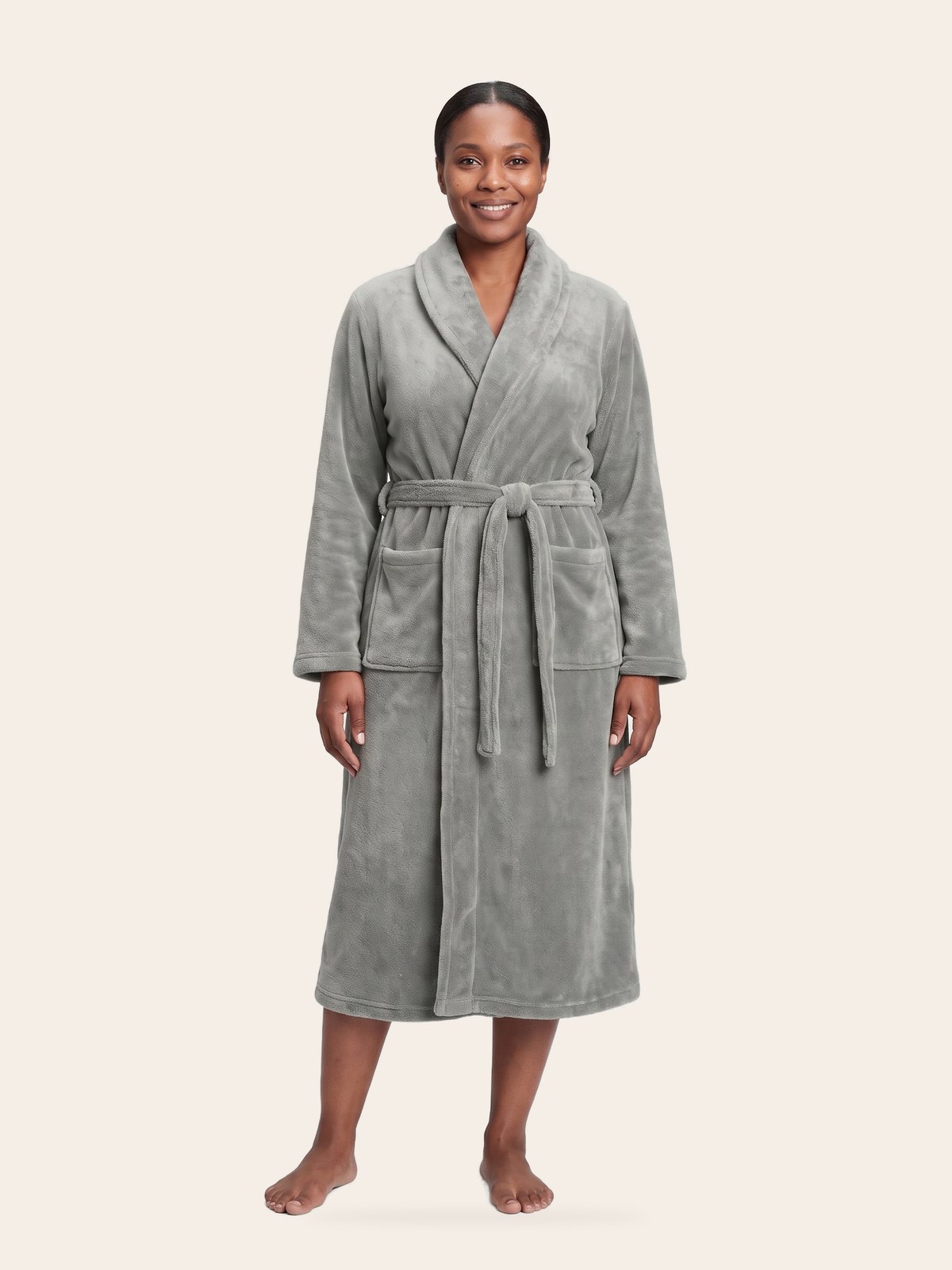
Our Plush Fleece Long Robe is about 48 to 50 inches long, with a shawl collar, two front pockets and a tie belt, in thick, soft plush fleece. Pair it with a lighter sleep layer and you can stay cozy in the evening without overheating under the covers.
A simple bedtime checklist
- Keep the room cool, around 60 to 68°F if you can.
- Match your pajamas to the room: insulating for cold, lighter for warm.
- Choose a relaxed fit with nothing that digs in.
- Keep a layer within reach, like a robe or an extra blanket.
- If your feet are cold, try loose socks.
None of this is a cure for insomnia. If you sleep badly for weeks, talk to your doctor. But comfortable clothes in a cool room are an easy, kind place to start.
Keep going: Cozy Christmas morning outfit ideas that still look good in photos and Nightgown vs pajamas: which is better for sleep?.
Mentioned here
Questions
What is the best thing to wear to bed?
There is no single answer. Wear what keeps you comfortable at your room temperature: warmer, insulating pajamas in a cool room, lighter ones in a warm room, in a relaxed fit.
What temperature should my bedroom be for sleep?
The Sleep Foundation puts the best temperature at about 65°F (18.3°C), and sleep experts generally recommend 60 to 68°F. Adjust a few degrees to what feels right for you.
Does wearing socks to bed help you sleep?
It may. Warm feet help your body release heat, and the Sleep Foundation notes that people with chronically cold feet may be at higher risk of trouble falling asleep. Choose loose socks, not compression socks.
What should I wear to bed if I get hot at night?
Go lighter on both sleepwear and blankets, and keep the room cool. The Sleep Foundation lists pajamas and bedding chosen for temperature regulation as ways to reduce sweating.
Keep reading
Sources: Sleep Foundation: The best temperature for sleep · Sleep Foundation: How bedroom temperatures and bedding choices impact sleep · Sleep Foundation: Sleeping with socks on