
The Hug Journal · Sleep ·
How to protect curly hair at night
How to protect curly hair at night: the pineapple, loose braids, satin bonnets and pillowcases, and why going to bed with soaking wet curls can backfire.
You spent real time on wash day. Then you wake up with one flat side, a halo of frizz and curls that look like they went through a wind tunnel. The good news: a few small habits at night protect most of that work, and none of them take more than two minutes.
Why does curly hair get frizzy overnight?
Mostly friction. When you turn over, your hair drags across the pillowcase. The American Academy of Dermatology (AAD) says that rubbing against the pillowcase can cause frizz and breakage, which is why its dermatologists suggest gathering curls up before bed. Curly and coily hair also tends to be on the dry side, so the AAD recommends washing only as often as you need to (at least every 2 to 3 weeks for many curly types) and keeping hair moisturized with conditioner and a leave-in or oil.
What is the pineapple method?
The pineapple is a loose, high ponytail at the very top of your head. Your curls fall forward over the tie instead of being crushed underneath you. The AAD describes it by name and says it helps preserve curls and reduce friction against the pillowcase.
- Flip your head forward and gather curls at your crown, near your hairline.
- Wrap a soft scrunchie or fabric tie around them once or twice. Keep it loose.
- Let the length fall forward. Do not twist it into a tight bun.
- In the morning, take it down, shake at the roots and refresh any curls that need it.
If your hair is too short to pineapple, a loose braid or a few twists work too. The AAD lists a loose braid and twists as other ways to protect curls while you sleep.
Is a bonnet or a satin pillowcase better for curls?
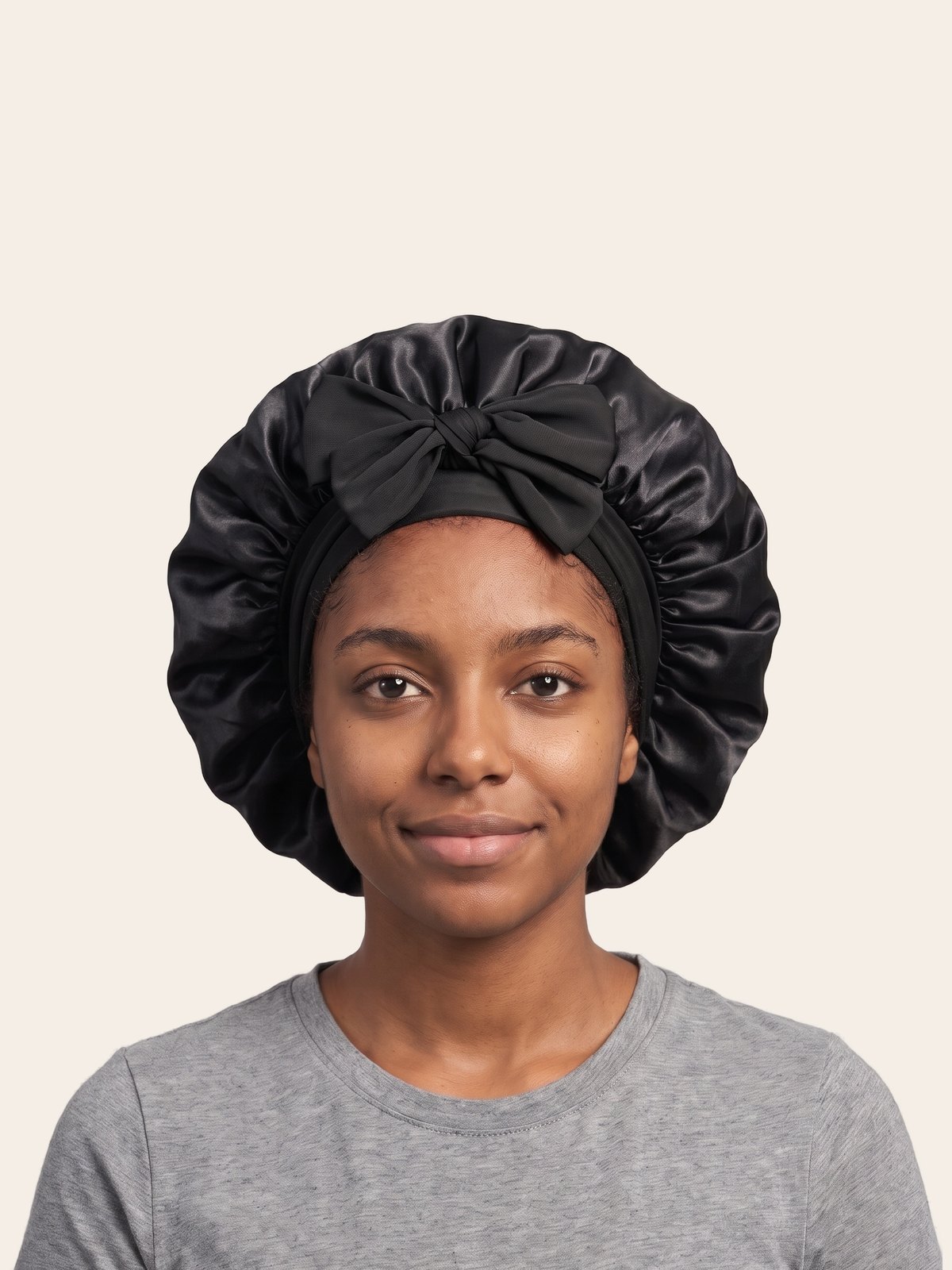
Both aim at the same problem. The AAD says satin or silk bonnets or pillowcases may reduce friction and help preserve your hairstyle. Cleveland Clinic also notes that swapping a cotton pillowcase for a satin or silk one can help with the friction that breaks fragile hair.
- A pillowcase stays on the bed. It is easy, but it only helps the part of your hair that touches it, and curls can still get squished.
- A bonnet goes with you. It keeps your pineapple or braids together even if you toss and turn or end up on a cotton throw pillow.
- Many people use both: a bonnet, plus a satin pillowcase as backup in case the bonnet slips.
If you want a bonnet with room for a pineapple, braids or long hair, our Satin Sleep Bonnet is one option made for this. It is an extra-roomy, double-layer polyester satin bonnet with a wide elastic band and long ties you knot at the front. Hand wash it cold and hang it to dry.
Can you go to bed with wet curly hair?
It is better not to make it a habit. Cleveland Clinic explains that hair is more fragile when wet and more prone to snapping or breaking, and that friction against the pillowcase can cause it to break. It also notes that moisture on the scalp creates an environment where bacteria and yeast can grow, which can lead to issues like folliculitis and dandruff. Its advice is to let hair air dry before bed, or use a hair dryer on low heat or cool if you are short on time.
A simple fix: move wash day to the morning or early evening so curls have time to dry before you lie down.
How tight should your nighttime style be?
Loose. The AAD warns that hairstyles that constantly pull can lead to a type of hair loss called traction alopecia, and that the constant rubbing of a hat, head scarf or other covering can contribute too. Its advice is to pull hair back loosely under any covering, and it says a head scarf or covering made of silk or satin is gentler on hair than other materials. If a style feels painful, the AAD says it is too tight.
A simple nighttime routine for curls
- Make sure your hair is dry, or mostly dry, before bed.
- If your ends feel dry, smooth on a little leave-in or oil, as the AAD suggests for moisture.
- Pineapple, braid loosely or twist.
- Cover with a satin or silk bonnet, tucked in gently, or sleep on a satin or silk pillowcase.
- In the morning, take your hair down with your fingers. The AAD suggests avoiding brushing dry curls, which can cause breakage and frizz.
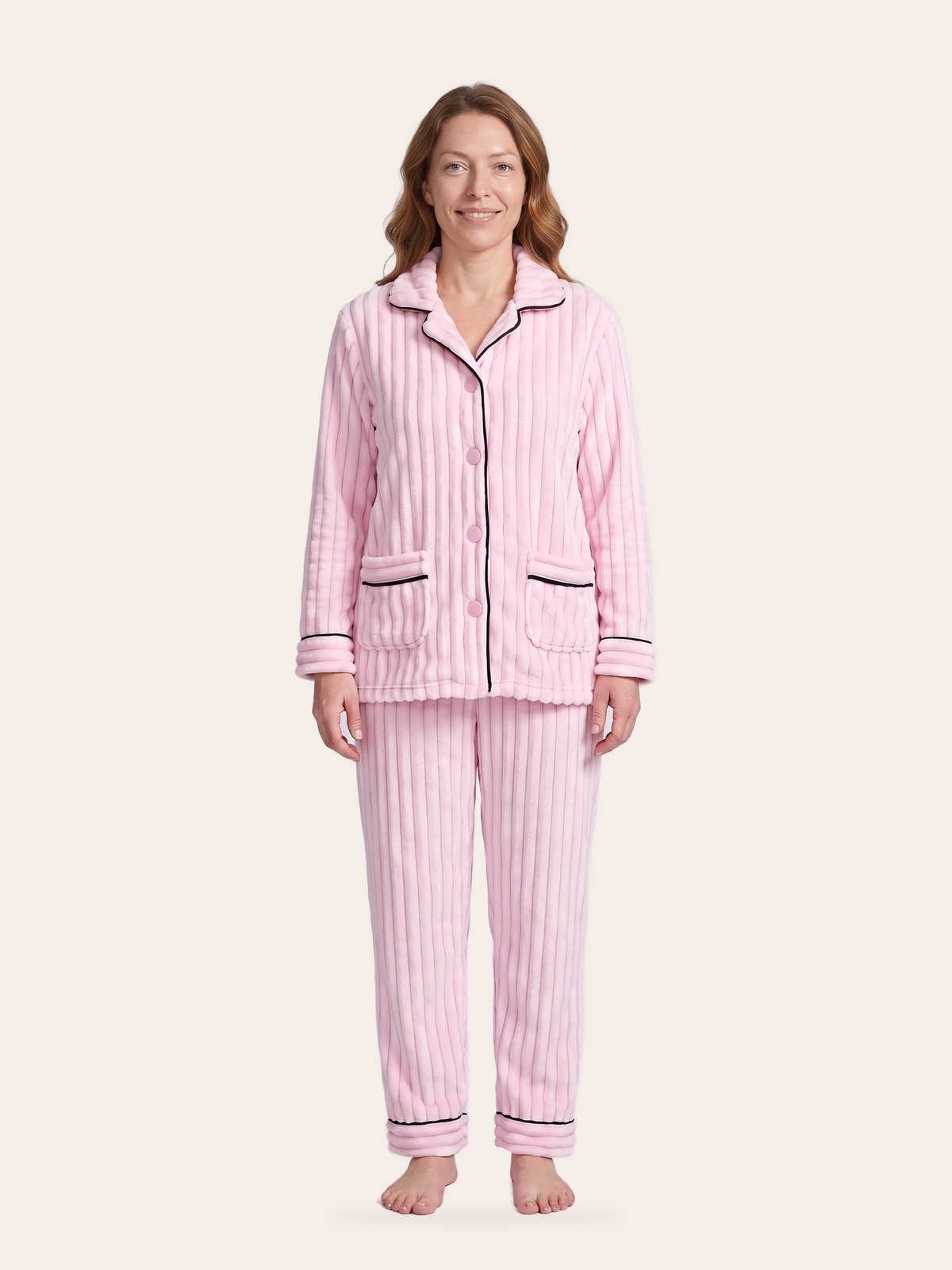
If you are building a full wind-down routine, The Cozy Night Set pairs the bonnet with a plush fleece PJ set and a long fleece robe.
When to see a dermatologist
Watch your hairline. The AAD lists pain from tightly pulled hair, stinging or crusts on the scalp, broken hairs around the forehead and a receding hairline as signs a hairstyle may be causing hair loss. If you notice these, or ongoing flakes or bumps on your scalp, a board-certified dermatologist can help.
Mentioned here
Questions
What is the pineapple method for curly hair?
You gather your curls into a loose, high ponytail on top of your head so they fall forward like a pineapple top. The American Academy of Dermatology says this helps preserve curls and reduces friction against the pillowcase.
Should I sleep with my curly hair up or down?
Up and loose is usually kinder. Dermatologists suggest a loose high ponytail or a loose braid so less hair rubs on the pillow, which can cause frizz and breakage.
Is it bad to sleep with wet curly hair?
It is better to let it dry first. Cleveland Clinic explains that wet hair is more fragile and can break from pillowcase friction, and that moisture on the scalp can let bacteria and yeast grow.
Does a satin bonnet help curly hair?
It can. The American Academy of Dermatology says satin or silk bonnets or pillowcases may reduce friction and help preserve your hairstyle.
Can a tight bonnet or scarf damage hair?
Yes, if it pulls. The AAD notes that constant rubbing or pulling from a hair covering can lead to traction alopecia, so tuck hair in loosely and choose a covering that does not squeeze.
Keep reading
Sources: American Academy of Dermatology: 6 curly hair tips from dermatologists · Cleveland Clinic: should you avoid going to bed with wet hair? · American Academy of Dermatology: hairstyles that pull can lead to hair loss