
The Hug Journal · Sleep ·
Best bedroom temperature for sleep (and what to wear)
The best bedroom temperature for sleep is cool, roughly the low to high 60s F. Here is why, plus what to wear to bed when the room runs cold, cool or warm.
If you toss and turn, kick off the covers, then pull them back on at 3 a.m., your bedroom temperature might be part of the story. Sleep experts agree on the general direction: cooler is better. Here is what they recommend, why it works, and how to dress for the room you actually have.
What is the best temperature for sleep?
The Sleep Foundation says the ideal bedroom temperature is around 65 to 68 degrees Fahrenheit. Cleveland Clinic suggests a slightly wider and cooler range for adults: 60 to 67 degrees Fahrenheit, about 15 to 19 degrees Celsius. It considers above 70 degrees Fahrenheit too hot and below 60 degrees too cold.
The numbers differ a little, but the message is the same: a cool room, somewhere in the 60s, is a good place to start. From there, adjust for what feels right to you.
Why does a cool room help you sleep?
Your body runs on a temperature rhythm. Cleveland Clinic explains that core body temperature decreases as part of falling asleep, and that heat in the room can work against that drop. The Sleep Foundation adds that the drop starts about two hours before you go to sleep and continues until early morning.
When the room is too warm, the Sleep Foundation says it can cause discomfort and restlessness, and higher body temperature has been linked to less slow-wave sleep and lower sleep quality. A cold room is not considered as disruptive as heat, but it can still be uncomfortable.
How do I make my bedroom cooler?
- Close the blinds during the day so the room does not build up heat.
- Turn the thermostat down at night.
- Use a fan or air conditioner in hot weather, or open windows on cooler evenings.
- Keep an eye on humidity.
- Try a warm bath an hour or two before bed, which the Sleep Foundation says may help your body cool down naturally afterward.
- Choose breathable bedding and sleepwear.
What should I wear to bed?
Cleveland Clinic puts it simply: sleep for the season, with breathable pajamas, sheets and blankets. The right outfit depends on where your room lands.
- Cold room (below about 60 degrees): add layers. The Sleep Foundation suggests more layers of clothing, including socks, or extra blankets. Long sleeves and long pants help.
- Cool room (60s): a regular pajama set with your usual bedding. Add or remove a blanket instead of changing clothes.
- Warm room (70s and up): go lighter. The Sleep Foundation recommends loose, breathable clothing when you are too hot, plus a fan.
What to wear when the room runs cold
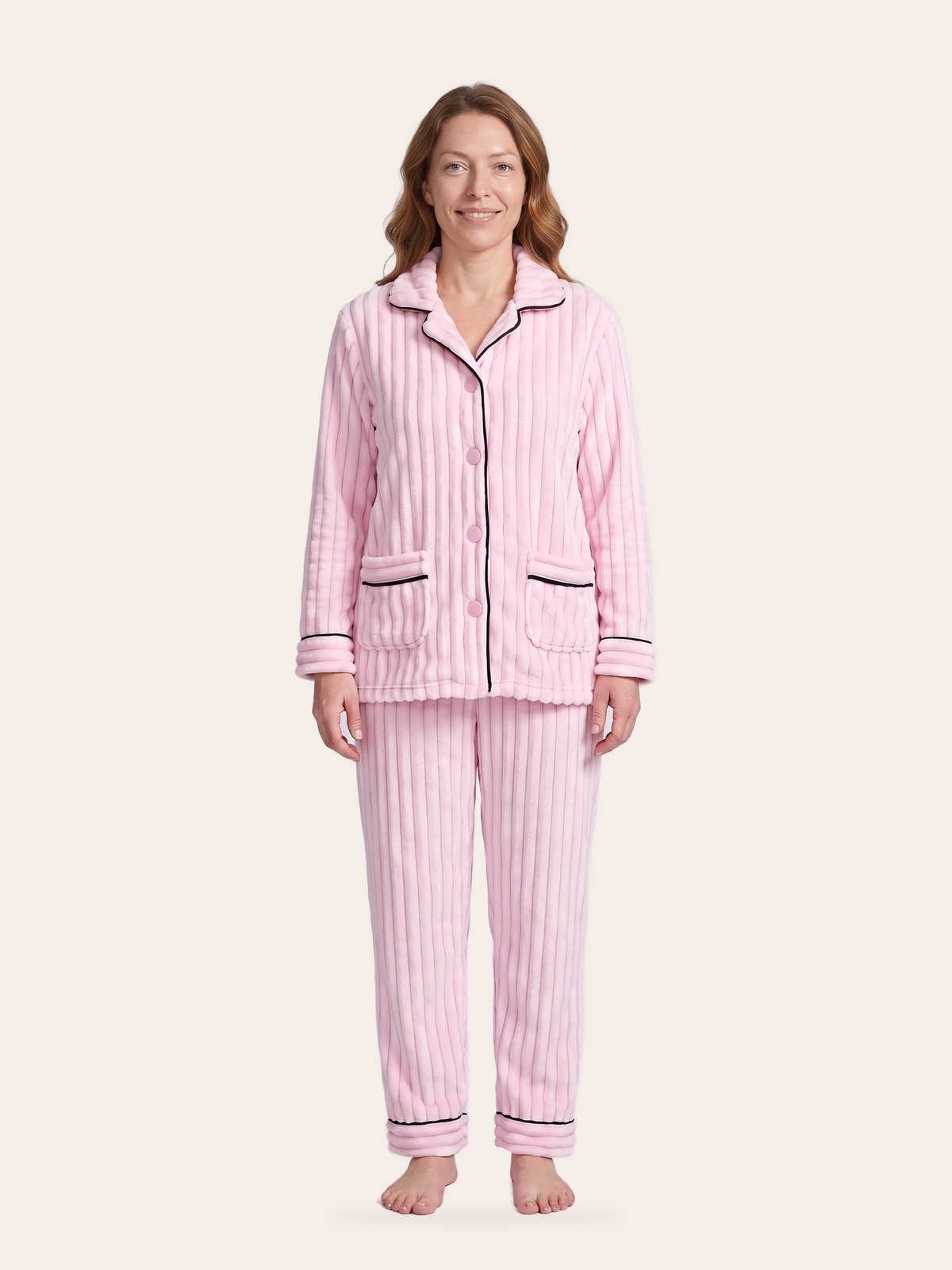
If your bedroom is drafty or you like the thermostat low in winter, long sleeves and full-length pants make a real difference. Our Striped Plush Fleece PJ Set is one option made for those nights: a button-front long-sleeve top and full-length pants with an elastic waist, in soft polyester plush fleece. Fleece holds warmth, so it suits a cold room better than a warm one. Pair it with socks if your feet run cold.
What to wear when the room runs warm
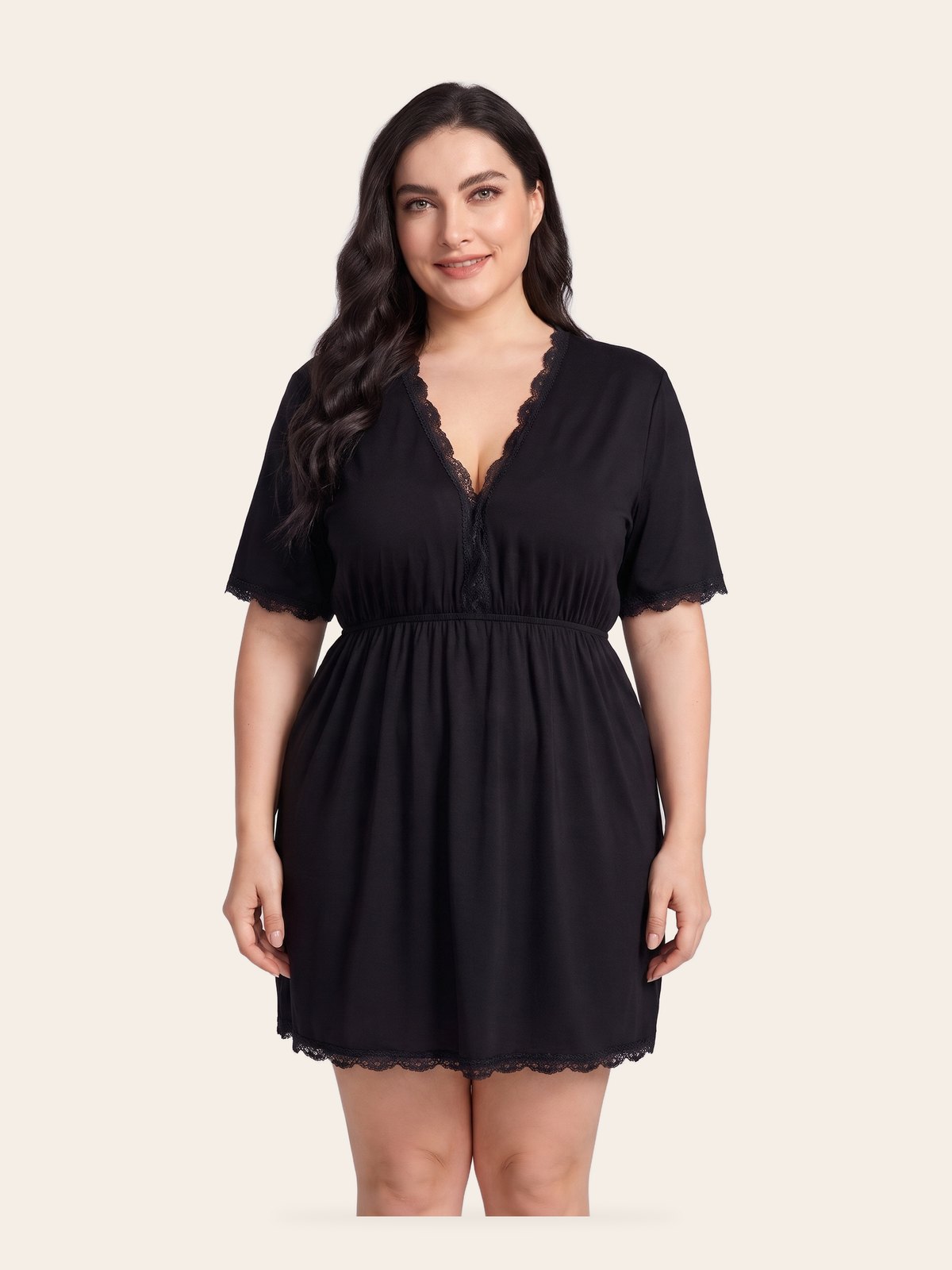
When you cannot cool the room, lighten what you wear. Loose shapes with short sleeves let more air move. If you want something light, our Lace Trim Sleep Dress is a relaxed, short-sleeve V-neck sleep dress in a soft polyester knit that ends above the knee. Keep a sheet nearby instead of a heavy comforter so you can adjust through the night.
How should I set up my bed for the season?
Bedding matters as much as pajamas. The Sleep Foundation notes that your mattress and sheets can affect body temperature through the night, so look for bedding that helps regulate temperature. In winter, a few thinner blankets are easier to adjust than one thick one, and the Sleep Foundation suggests a hot water bottle or heating pad if you are cold. In summer, strip back to a sheet and a light blanket.
What if you and your partner disagree?
This is common. Set the room to the cooler person's preference, then let the warmer-blooded sleeper add layers and blankets. It is easier to warm up under a blanket than to cool down in a hot room.
When to talk to a doctor
Mayo Clinic advises seeing a health care provider if night sweats happen regularly, interrupt your sleep, or come with a fever, weight loss or other symptoms of concern. If you wake up drenched even in a cool room, that is worth mentioning.
Keep going: Nightgown vs pajamas: which is better for sleep? and How to choose plus size pajamas that fit (and stay comfy all night).
Mentioned here
Questions
What is the best room temperature for sleeping?
Cool. The Sleep Foundation cites about 65 to 68 degrees Fahrenheit, and Cleveland Clinic suggests 60 to 67 degrees Fahrenheit for adults. Both point to a cool room rather than a warm one.
Is 72 degrees too hot for sleeping?
For many people it runs warm. Cleveland Clinic calls bedroom temperatures above 70 degrees Fahrenheit too hot for sleep. Comfort varies, so adjust pajamas and bedding if you cannot cool the room.
Why do we sleep better when it is cool?
Your core body temperature naturally drops as you fall asleep. The Sleep Foundation says this drop starts about two hours before bed, and a cooler room works with it, while heat can cause restlessness.
What should I wear to bed in a cold room?
Add layers. The Sleep Foundation suggests more layers of clothing, including socks, or extra blankets if you are cold at night.
What should I wear to bed in a warm room?
Something loose and breathable. The Sleep Foundation recommends loose, breathable clothing and suggests a fan when you are too hot.
Keep reading
Sources: Sleep Foundation: the best temperature for sleep · Cleveland Clinic: what is the best temperature for sleep? · Sleep Foundation: why am I shivering or sweating at night? · Mayo Clinic: night sweats, when to see a doctor